Tampilkan postingan dengan label Bill Clinton. Tampilkan semua postingan

Jumat, 13 November 2015

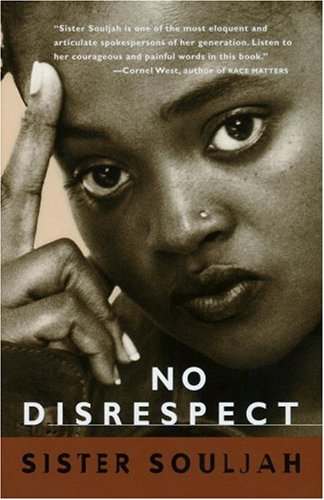
Sister Souljah had a Hillary moment.

She's talking about a number of things to Time, but when she's asked what she thinks about Hillary Clinton, she "pauses" and "then pulls out an unsealed envelope":
“I want to control what I say so that I can be quoted properly. I have this past history of being misquoted or misunderstood.” She slides an index card across the table. It reads, “She reminds me too much of the slave plantation white wife of the white ‘Master.’ She talks down to people, is condescending and pandering. She even talked down to the Commander in Chief, President Barack Obama, while she was under his command!”
Souljah also offers her own definition of the term that bears her name:
“People say, ‘What is a Sister Souljah moment?’ And I say, ‘That’s when you meet a beautiful, powerful woman—and you just can’t forget her.’”

"No Disrespect."

Sabtu, 24 Oktober 2015

Rachel Maddow pushed Hillary to explain Bill Clinton's "Don't Ask, Don't Tell" policy and the Defense of Marriage Act.

Hillary said:
On Defense of Marriage, I think what my husband believed – and there was certainly evidence to support it – is that there was enough political momentum to amend the Constitution of the United States of America, and that there had to be some way to stop that. And there wasn’t any rational argument – because I was in on some of those discussions, on both “don’t ask, don’t tell” and on – on DOMA, where both the president, his advisers and occasionally I would – you know, chime in and talk about, “you can’t be serious.  You can’t be serious.” But they were.  And so, in – in a lot of ways, DOMA was a line that was drawn that was to prevent going further.  
Maddow offers a paraphrase: "It was a defensive action?" Hillary adopts the phrase:
It was a defensive action.  The culture rapidly changed so that now what was totally anathema to political forces – they have ceded.  They no longer are fighting, except on a local level and a rear-guard action.  And with the U.S. Supreme Court decision, it’s settled. “Don’t ask, don’t tell” is something that – you know, Bill promised during the ‘92 campaign to let gays serve openly in the military.  And it’s what he intended to do... And then... it was the most astonishing overreaction... by the military, by the Congress.  I – I remember being – you know, on the edge of one of those conversations, and – and so “don’t ask, don’t tell,” again, became a defensive line.  So I’m not in any way excusing them.  I’m explaining them... And I think that sometimes, as a leader in a democracy, you are confronted with two bad choices.  And it is not an easy position to be in, and you have to try to think, OK, what is the least bad choice and how do I try to cabin this off from having worse consequences?
Well defended. 

Senin, 05 Oktober 2015

Bill Clinton, caught hoping Hillary will not become President.

From a New Yorker article titled "The Man Who Wouldn’t Sit Down/How Univision’s Jorge Ramos earns his viewers’ trust," which is mainly about that reporter who spoke out of turn at a Donald Trump press conference. Toward the end of the article, there's some discussion about the time Donald Trump's "scolded Jeb Bush for speaking Spanish"...
... to wit, “I like Jeb. He’s a nice man. But he should really set the example by speaking English while in the United States.” [Ramos's co-anchor María Elena] Salinas will report this item straight, near the end of the show, and Univision researchers have thrown together, on very short notice, a remarkable segment of Ronald Reagan, Jimmy Carter, George W. Bush, Barack Obama, John Kerry, Hillary Clinton, Al Gore, and Marco Rubio all speaking Spanish, some more fluently than others. Bill Clinton says, in English, “I hope I’ll be the last non-Spanish-speaking President.”
There may be a usable clip somewhere with Hillary Clinton saying Spanish words. What English speaker can't read Spanish from a written script? But Hillary Clinton doesn't speak Spanish. According to the NYT, Hillary is monolingual and "No Habla Español" (she couldn't repeat the chanted phrase "Si se puede"). 

Obama bombed a hospital.

Where is the outrage?

ADDED: At the link, which goes to my son John's Facebook page, I said: "Imagine if Bush had done this." And John said: "We don't have to imagine..." and linked to a NYT article from 2008: "Evidence Points to Civilian Toll in Afghan Raid."

From Amy Davidson at The New Yorker: "Five Questions About the Bombing of a Hospital in Kunduz":
What did the Afghan forces want us to bomb? This is the fundamental issue: Was the hospital the target, or was the target something or someone “in the vicinity”?...
Why didn’t the bombing stop? It went on for an hour, in multiple waves, although [Doctors Without Borders, which runs the hospital] has said that it immediately called contacts in Afghanistan, Washington, D.C., and wherever else it could think of—it is used to operating in war zones, and has the phone numbers for calls like that—to try to get the attack stopped. Who was on the other end of the line? Did those interlocutors make further calls, to Afghans or Americans? General Campbell, asked by reporters if the Pentagon knew about the calls, said that it was a question for investigators. But, in this instance, the matter of communications gets to questions larger than logistics, such as... Do we understand our allies’ motives and priorities in Afghanistan?
ALSO: My phrase "Where is the outrage?" sounds like a stock phrase with a particular reference point, but what? Meade says it's from the 1996 presidential campaign. Bob Dole said it:
Sounding like a crusader, Bob Dole implored his audiences today to ''rise up'' against the nation's news organizations, which he said were protecting the Clinton Administration, and be outraged that President Clinton had, in Mr. Dole's words, violated the public trust....

Listing a string of questionable practices by the Administration, including accepting what he called laundered cash from foreigners and obtaining confidential F.B.I. files, Mr. Dole demanded repeatedly in Houston earlier in the day, ''Where is the outrage?''

Appearing at downtown performing arts center, where he stood before a giant mural depicting the glory days of the Lone Star State, Mr. Dole continued: ''Can you imagine former President Bush doing one of those things? No! And you never imagine Bob Dole doing one of those things either. So where's the outrage? Where's the outrage? When will the voters start to focus?''

It's the first Monday in October, so the Supreme Court is back on the bench, and mainstream media are telling readers which upcoming cases to care about.

SCOTUSblog collects links.

I'll just read the one in The Washington Post, from Robert Barnes, which I'm choosing because the headline so perfectly sums up the reason mainstream media think you could or should care: "Supreme Court faces politically charged election-year docket."

The "politically charged" issues that might matter to an ordinary person — because they might affect how you'll vote in the presidential election (the all-important question of our time) — are: "the legality of racial preferences to encourage diversity; how far government must go to accommodate religious liberty; how far government may go to restrict a woman’s right to abortion."

I'm not an ordinary person. I'm a law professor, and I've been a law professor for a very long time. From that perspective, I'm going to home in on the language discrepancy between: "how far government must go to accommodate religious liberty" and "how far government may go to restrict a woman’s right to abortion."

The "must" is deceptive if not wrong. The cases about accommodating religious believers are not about what the Constitution requires — what government must do — but about the Religious Freedom Restoration Act ("RFRA") — which is a limitation that the federal government chose to take on and which the government may change by statute. We already know — and the current cases are not about — that the government need only treat religious believers the same as everybody else when it comes to regulating conduct. That's the constitutional law. As I've explained before on this blog, RFRA was a reaction to the Court's rejection of constitutionally required accommodation: "The RFRA bill was sponsored in the House by Congressman Chuck Schumer and in the Senate by Teddy Kennedy. (Each had a GOP co-sponsor). The Democrats controlled Congress, but the Republicans all voted for it too (with the sole exception of [arch-conservative] Jesse Helms)." President Clinton signed the bill, which he effused over: "The power of God is such that even in the legislative process miracles can happen."

The government — Democrats and Republicans — chose to accommodate religion, and the Court is simply stuck determining what their statute means. Government can repeal or amend RFRA or put language in statutes (e.g., the Affordable Care Act) saying RFRA doesn't apply, so we are not talking about how far government must go to accommodate religious liberty.

Adjust your presidential preferences accordingly.

Jumat, 02 Oktober 2015

The history of the word "politicize" — from 1968 to 2015.

May 1968: "S.D.S. is out to politicize the campus."

September 1973:  "It was not simply a matter of increasing numbers, but of the highly politicized manner in which additional blacks found their way into Harvard — overcoming nearly a century of racial and sociological barriers to a sizable presence at Harvard. Militancy and political threats perpetrated by Negro students in 1968-70 paved the way for major alterations in Harvard's recruiting and admissions policies. This resulted in a fivefold increase in black enrollment, but the politization surrounding this development plagued virtually all aspects of black-white relationships, dividing blacks and whites in to mutually exclusive communities." From "The black experience at Harvard," by Martin Kilson.

August 1976: Back when Jimmy Carter, a peanut farmer, was getting the Democratic nomination: "Planters [Peanuts] has been the focus of recent efforts to politicize peanuts, such as the recent Democratic National Convention to 'borrow' its Mr. Peanut mascot. 'Mr. Peanut is an apolitical figure'..."

January 1979: Pope John Paul II in Mexico City: "You know that liberation theology is a true theology... But perhaps it is also a false theology, because if one starts to politicize theology, apply doctrines of political systems, ways of analysis which are not Christian, then this is no longer theology."

September 1980: "On the Lower East Side in the late 60's, his aim was to politicize the hippies, not to make the larger world an adjunct to the counterculture." From a review of a new book by Abbie Hoffman.

December 1986: "In 1966, Mao turned to radical Shanghai students to trigger the Cultural Revolution, a decade-long upheaval intended to politicize every facet of Chinese life."
 
November 1992: Hugh Hefner is quoted: "I think the real question is why, after a sexual revolution began in the 50's, did the women's movement seize upon an anti-sexual theme.... A significant part of the hurtful side of feminism is failing to understand how a hurtful childhood can shape you, and instead trying to politicize all behavior. There's really no benefit to viewing sex as the enemy. The sex act is some of the best of what we are, as family, and as a civilization. The notion that sex and violence are connected like law and order is untrue. They are polar opposites. One is hurting; one is hugging."

January 1994: "Do you ever wonder if it was a mistake to politicize the private lives of politicians? Bill Clinton was rumored to have a Gary Hart-ish sexual life, yet he's turned out to be quite supportive of women's rights." From a Q&A with 3 female reporters.

May 1996: When Democratic Representative Barney Frank of Massachusetts said that the Defense of Marriage bill was motivated by politics, he was accused of a "desperate attempt to politicize what is not a political issue."

September 1999: After shootings in a Fort Worth church, Texas Governor George W. Bush signed legislation permitting guns in churches, Vice President and presidential candidate Al Gore started asking ''How can we allow guns in churches?'," and a Bush spokesman said: "Americans are tired of politicians trying to politicize every tragedy.'' 

December 1999: "Our political leaders must be judged on how they treat everyone, including the least fortunate. We must ask ourselves: do we solve problems or simply push them away, politicize them and criminalize them?'' said Hillary Clinton, about homeless people, whom Mayor Rudolph W. Giuliani was having arrested for sleeping on the streets.

April 2000: "Holding congressional hearings now would only further politicize this tragedy [of Elian Gonzalez], further inflame the passions, and do nothing to resolve the future of the child.... We should not allow this situation to degenerate further into which political party can benefit the most. Americans have made it clear that they do not want to see this issue politicized," wrote Republican Senator Chuck Hagel.

October 2004: "There have been faith-based efforts in America for years and years. There hasn't always been an effort to politicize it," said presidential candidate John Kerry speaking to a group of black pastors.

February 2012: "I think there’s been a chord struck over this issue, this issue of political organizations who are trying to politicize women’s reproductive health," said Planned Parenthood President Cecile Richards.

October 2015:
President Obama, after another mass shooting: "Somebody somewhere will comment and say, Obama politicized this issue. Well, this is something we should politicize. It is relevant to our common life together, to the body politic."