May 1968: "S.D.S. is out to politicize the campus."
September 1973: "It was not simply a matter of increasing numbers, but of the highly politicized manner in which additional blacks found their way into Harvard — overcoming nearly a century of racial and sociological barriers to a sizable presence at Harvard. Militancy and political threats perpetrated by Negro students in 1968-70 paved the way for major alterations in Harvard's recruiting and admissions policies. This resulted in a fivefold increase in black enrollment, but the politization surrounding this development plagued virtually all aspects of black-white relationships, dividing blacks and whites in to mutually exclusive communities." From "The black experience at Harvard," by Martin Kilson.
August 1976: Back when Jimmy Carter, a peanut farmer, was getting the Democratic nomination: "Planters [Peanuts] has been the focus of recent efforts to politicize peanuts, such as the recent Democratic National Convention to 'borrow' its Mr. Peanut mascot. 'Mr. Peanut is an apolitical figure'..."
January 1979: Pope John Paul II in Mexico City: "You know that liberation theology is a true theology... But perhaps it is also a false theology, because if one starts to politicize theology, apply doctrines of political systems, ways of analysis which are not Christian, then this is no longer theology."
September 1980: "On the Lower East Side in the late 60's, his aim was to politicize the hippies, not to make the larger world an adjunct to the counterculture." From a review of a new book by Abbie Hoffman.
December 1986: "In 1966, Mao turned to radical Shanghai students to trigger the Cultural Revolution, a decade-long upheaval intended to politicize every facet of Chinese life."
November 1992: Hugh Hefner is quoted: "I think the real question is why, after a sexual revolution began in the 50's, did the women's movement seize upon an anti-sexual theme.... A significant part of the hurtful side of feminism is failing to understand how a hurtful childhood can shape you, and instead trying to politicize all behavior. There's really no benefit to viewing sex as the enemy. The sex act is some of the best of what we are, as family, and as a civilization. The notion that sex and violence are connected like law and order is untrue. They are polar opposites. One is hurting; one is hugging."
January 1994: "Do you ever wonder if it was a mistake to politicize the private lives of politicians? Bill Clinton was rumored to have a Gary Hart-ish sexual life, yet he's turned out to be quite supportive of women's rights." From a Q&A with 3 female reporters.
May 1996: When Democratic Representative Barney Frank of Massachusetts said that the Defense of Marriage bill was motivated by politics, he was accused of a "desperate attempt to politicize what is not a political issue."
September 1999: After shootings in a Fort Worth church, Texas Governor George W. Bush signed legislation permitting guns in churches, Vice President and presidential candidate Al Gore started asking ''How can we allow guns in churches?'," and a Bush spokesman said: "Americans are tired of politicians trying to politicize every tragedy.''
December 1999: "Our political leaders must be judged on how they treat everyone, including the least fortunate. We must ask ourselves: do we solve problems or simply push them away, politicize them and criminalize them?'' said Hillary Clinton, about homeless people, whom Mayor Rudolph W. Giuliani was having arrested for sleeping on the streets.
April 2000: "Holding congressional hearings now would only further politicize this tragedy [of Elian Gonzalez], further inflame the passions, and do nothing to resolve the future of the child.... We should not allow this situation to degenerate further into which political party can benefit the most. Americans have made it clear that they do not want to see this issue politicized," wrote Republican Senator Chuck Hagel.
October 2004: "There have been faith-based efforts in America for years and years. There hasn't always been an effort to politicize it," said presidential candidate John Kerry speaking to a group of black pastors.
February 2012: "I think there’s been a chord struck over this issue, this issue of political organizations who are trying to politicize women’s reproductive health," said Planned Parenthood President Cecile Richards.
October 2015: President Obama, after another mass shooting: "Somebody somewhere will comment and say, Obama politicized this issue. Well, this is something we should politicize. It is relevant to our common life together, to the body politic."
Tampilkan postingan dengan label Obama and guns. Tampilkan semua postingan
Tampilkan postingan dengan label Obama and guns. Tampilkan semua postingan
Jumat, 02 Oktober 2015

"Somebody somewhere will comment and say, Obama politicized this issue," said Obama.
"Well, this is something we should politicize. It is relevant to our common life together, to the body politic."
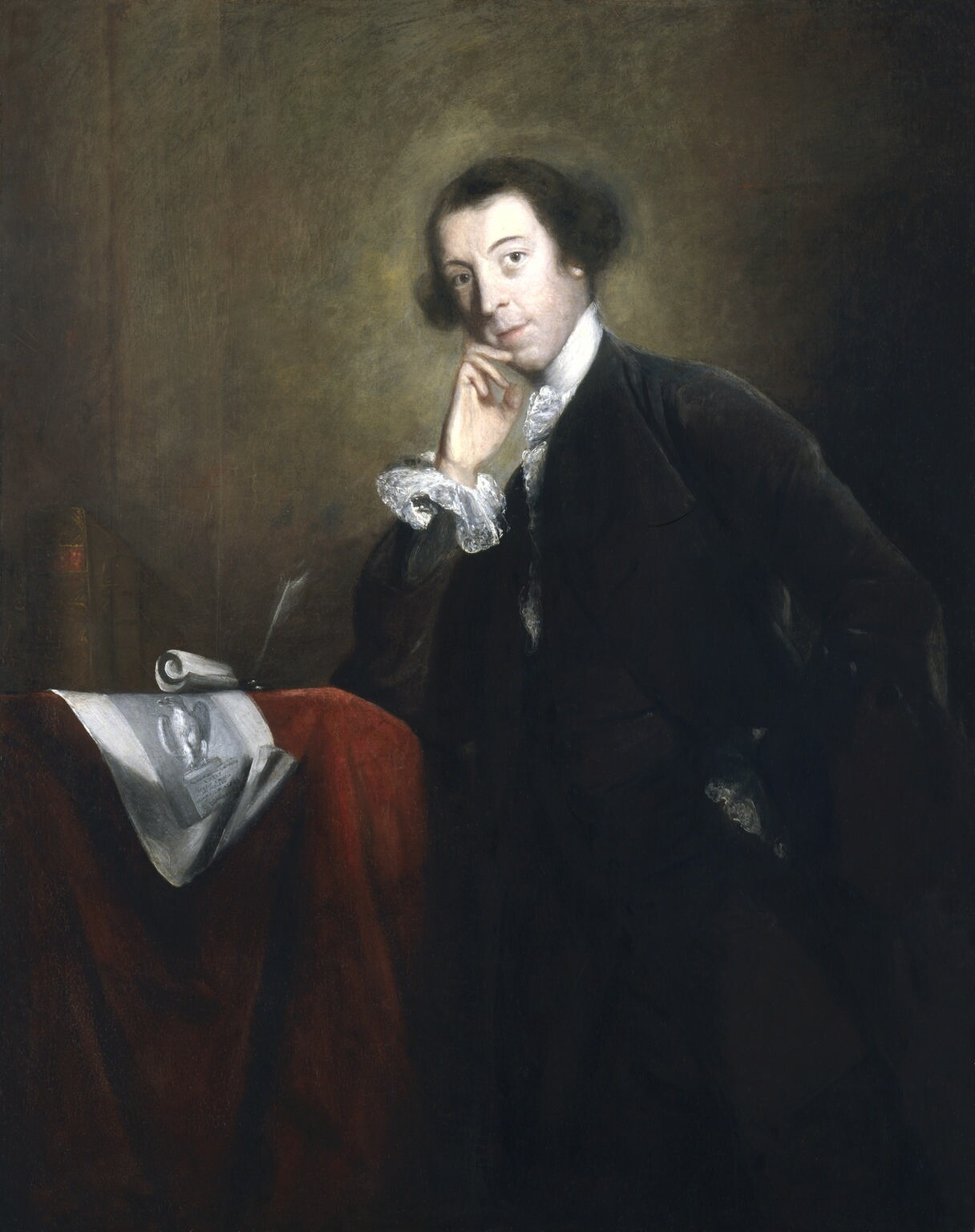
It's even odd to see the word "politicize" used in a positive way. I looked up the word (in the OED). The original meaning was "To engage in or talk about politics." That's an intransitive verb. You're not politicizing anything, just politicizing — gabbing about politics. It goes back to 1758. Horace Walpole, the 4th Earl of Orford, wrote: "But while I am politicizing, I forget to tell you half the purport of my letter."
The transitive verb, meaning "To make political" has spent most of its time referring to people — making them "politically aware or politically active." That goes back to 1846. The idea of making a subject matter political seems to be much more recent. The first example in the OED is from 1991: "Sociobiology was politicized at the outset by those who saw in it an elaborate argument for justifying a competitive, capitalist status quo." Timothy H. Goldsmith Biol. Roots Human Nature i. 5.
Now, I'm getting deeply into NYT archive, looking at the development of the word. The transitive verb referring to people spikes in 1968 in the context of politicizing students. (There's also talk of politicizing the Court and politicizing black people.) By the early 70s, I'm seeing references to politicizing the activities of persons — politicizing education, politicizing the Watergate investigation. The idea of politicizing an issue happens a bit later.
ADDED: I've gone through 1,000+ occurrences of "politicize" in the NYT archive, and I'll do another post showing you a lot of interesting things about it, but I want to complete this post by saying that I believe that Obama did something new. I can't find earlier examples of a high-level, newsworthy person saying that politicizing an issue is a good idea. I can find examples of people saying that it's a good idea to politicize people — to make them politically aware/active.
In the late 60s, there were lots of lefties who were excited about politicizing college students, and the yippies wanted to politicize hippies. But the later-developing idea of politicizing an issue is always somebody saying they don't want to politicize it, that they want to "de-politicize" it, or an attack on somebody else for politicizing it.
I did find this, from 1989, in a long article by the art critic Grace Glueck about the artist Jenny Holzer:
"When Americans are killed in mine disasters, we work to make mines safer. When Americans are killed in floods and hurricanes, we work to make communities safer. When roads are unsafe, we fix them. To reduce auto fatalities, we have seat belt laws because we know it saves lives," Obama said.Of course, gun rights advocates are politicizing this in the other direction. It's entirely predictable. What's new is the clear statement: This is something we should politicize.
"So the notion that gun violence is somehow different, that our freedom and our Constitution prohibits any modest regulation of how we use a deadly weapon, when there are law-abiding gun owners across the country who could hunt and protect their families and do everything they do under such regulations. Doesn't make sense."
It's even odd to see the word "politicize" used in a positive way. I looked up the word (in the OED). The original meaning was "To engage in or talk about politics." That's an intransitive verb. You're not politicizing anything, just politicizing — gabbing about politics. It goes back to 1758. Horace Walpole, the 4th Earl of Orford, wrote: "But while I am politicizing, I forget to tell you half the purport of my letter."
The transitive verb, meaning "To make political" has spent most of its time referring to people — making them "politically aware or politically active." That goes back to 1846. The idea of making a subject matter political seems to be much more recent. The first example in the OED is from 1991: "Sociobiology was politicized at the outset by those who saw in it an elaborate argument for justifying a competitive, capitalist status quo." Timothy H. Goldsmith Biol. Roots Human Nature i. 5.
Now, I'm getting deeply into NYT archive, looking at the development of the word. The transitive verb referring to people spikes in 1968 in the context of politicizing students. (There's also talk of politicizing the Court and politicizing black people.) By the early 70s, I'm seeing references to politicizing the activities of persons — politicizing education, politicizing the Watergate investigation. The idea of politicizing an issue happens a bit later.
ADDED: I've gone through 1,000+ occurrences of "politicize" in the NYT archive, and I'll do another post showing you a lot of interesting things about it, but I want to complete this post by saying that I believe that Obama did something new. I can't find earlier examples of a high-level, newsworthy person saying that politicizing an issue is a good idea. I can find examples of people saying that it's a good idea to politicize people — to make them politically aware/active.
In the late 60s, there were lots of lefties who were excited about politicizing college students, and the yippies wanted to politicize hippies. But the later-developing idea of politicizing an issue is always somebody saying they don't want to politicize it, that they want to "de-politicize" it, or an attack on somebody else for politicizing it.
I did find this, from 1989, in a long article by the art critic Grace Glueck about the artist Jenny Holzer:
Holzer's real admirers among artists tend, naturally, to be those involved with newer forms. ''Her work is great, a bit ahead of its time,'' says Christoper Wool, a painter who last year began to make ''word drawings'' that deal with words as abstractions.... ''She has managed to politicize her art without losing the poetics of it. And she's made the light-emitting diodes so much her own that no one else can use them without evoking her work.''Since feminism runs on the theory that "the personal is political," it makes sense to find the positive view of politicization in this context.
Holzer... accepts the term ''political'' for her work. ''I hope it's political in the larger sense, not topical,'' she says. ''It deals with life-and-death issues; that's supposedly what politics are about.'' An avowed feminist, she is usually seen as part of a group of other strong female artists - Cindy Sherman, Louise Lawler and Kruger, among them - who in their work seem concerned about ''real world'' rather than fantasy subject matter, especially the might of military and corporate America.
Langganan:
Postingan (Atom)