Tampilkan postingan dengan label metaphor. Tampilkan semua postingan

Jumat, 13 November 2015

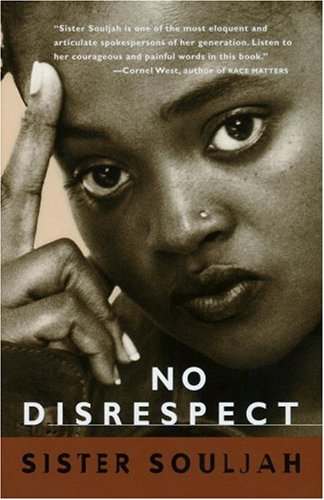
Sister Souljah had a Hillary moment.

She's talking about a number of things to Time, but when she's asked what she thinks about Hillary Clinton, she "pauses" and "then pulls out an unsealed envelope":
“I want to control what I say so that I can be quoted properly. I have this past history of being misquoted or misunderstood.” She slides an index card across the table. It reads, “She reminds me too much of the slave plantation white wife of the white ‘Master.’ She talks down to people, is condescending and pandering. She even talked down to the Commander in Chief, President Barack Obama, while she was under his command!”
Souljah also offers her own definition of the term that bears her name:
“People say, ‘What is a Sister Souljah moment?’ And I say, ‘That’s when you meet a beautiful, powerful woman—and you just can’t forget her.’”

"No Disrespect."

Rabu, 04 November 2015

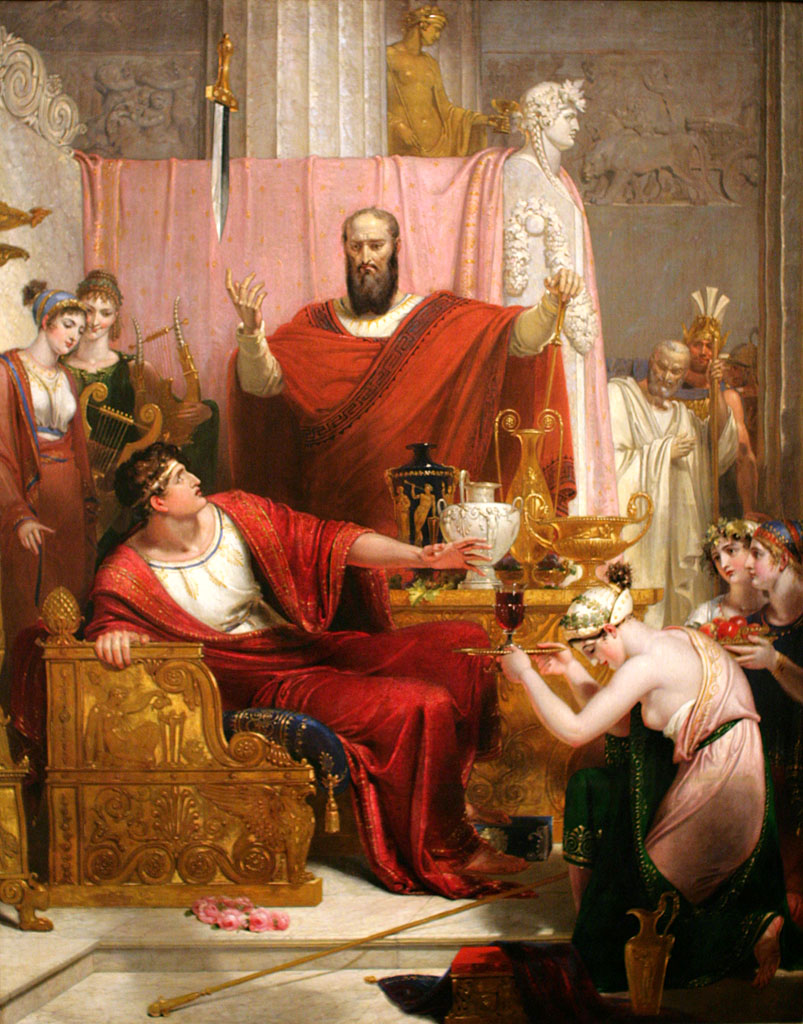
"We hang over each other’s heads, more and more heavily, self-appointed swords of Damocles waiting with baited breath to strike."

I'm trying to read "The Decay of Twitter" — an article in The Atlantic critical of the way people write on Twitter — but what about the way people write in The Atlantic? That sentence, quoted above, may be the worst sentence I've read in the last 10 years.

First, what the hell is "baited breath"? Avoid clichés and you won't have this problem, but FYI, it's "bated breath." No one uses the verb "bate" anymore, but it's like "abate." If you have "bated breath," you're holding your breath. If you have "baited breath," maybe you've been eating fish, but it has little to do with acting like a sword hanging over everyone's head.

But a sword of Damocles can't be waiting and looking for things to strike at. The sword of Damocles hangs over the one person who's sitting under it. (So don't sit there!)


The sword has no mind and makes no decision about when to strike. It hangs by a hair and will, when the hair breaks, fall only on the person who's under it. The sword doesn't become progressively heavier, nor does it "appoint' itself.

You shouldn't be using these clichés in the first place, but using them without thinking about what they mean and what images you're creating is atrocious — especially in an article that purports to critique writing.

Selasa, 03 November 2015

It's the way Justice Kennedy expressed his hate for the term "swing vote" that's so revealing.

"I hate that term... I get this visual image of spatial gyrations. The cases swing; I don’t."

The most revealing thing is not that he hates the term "swing vote." That's not surprising. He wants to be thought of as serious and consistent. The term impugns.

The most revealing thing is that in thinking about an abstraction, he gets a visual image and his thinking about an abstraction is, it seems, influenced by the way that abstraction-made-concrete looks in his mind.

This is useful for lawyers who are trying to figure out how to tip Kennedy one way or the other. Did "tip" just give you a visual image? If not, then you don't have the kind of mind that Kennedy seems to have.

Personally, I have this kind of mind, and I know very well how thought is influenced by language that generates images. The word "swing" makes Justice Kennedy picture a swing — picture himself as a swing, suspended, ungrounded, susceptible to pushes — and he hates (strong word!) how he looks in that image. Perhaps he sees himself as a child on a swing. Perhaps he sees himself as the bad guy in a western who's going to swing in a hangman's noose.

Stressing the vividness of the image as it appears in his mind, he indulges — even as he's speaking with notable concision — in a redundancy, adding the unnecessary adjective "visual" to "images."

So it seems that Justice Kennedy is one of these people for whom the metaphors within words feel alive. George Orwell wrote about dying metaphors in "Politics and the English Language":
A newly invented metaphor assists thought by evoking a visual image, while on the other hand a metaphor which is technically "dead" (e.g. iron resolution) has in effect reverted to being an ordinary word and can generally be used without loss of vividness. But in between these two classes there is a huge dump of worn-out metaphors which have lost all evocative power and are merely used because they save people the trouble of inventing phrases for themselves. Examples are: Ring the changes on, take up the cudgel for, toe the line, ride roughshod over, stand shoulder to shoulder with, play into the hands of, no axe to grind, grist to the mill, fishing in troubled waters, on the order of the day, Achilles' heel, swan song, hotbed...
What Orwell didn't say was that the effect of language varies from person to person. There is no objectivity to the perception whether a metaphor is fully alive, totally dead, or somewhere in the gray area between life and death.

The life of a metaphor is a subtle matter that belongs within the realm of the individual mind, including the mind of the man who (co)wrote: "At the heart of liberty is the right to define one’s own concept of existence, of meaning, of the universe, and of the mystery of human life."

Did he get a visual image of a heart, a beating heart of liberty? Did he see, within that heart, the universe? Did the image of the universe inside a heart blur into a mystery as he compared the universe inside a heart with the unborn baby inside a womb — two bodily organs containing — who's to say? — everything?

You may think the life of that baby is undeniably, concretely real, but do you understand how real liberty might look in the mind of a man who gets visual images?

ADDED: The Orwell quote contains the very phrase I marked as a redundancy: "A newly invented metaphor assists thought by evoking a visual image..."

Minggu, 01 November 2015

David Brooks made what might be the stupidest joke I have ever heard a serious person make publicly.

On "Meet the Press" today, there was a panel discussion of President Obama's decision to put "boots on the ground" in Syria, a change from what Obama had been saying. We see tape of Obama on 3 separate occasions: 1. "In no event are we considering any kind of military action that would involve boots on the ground," 2. "I will not put American boots on the ground in Syria," 3. "The notion that the United States should be putting boots on the ground I think would be a profound mistake. And I want to be very clear and very explicit about that."

When it was Brooks's turn to speak, he began: "Yeah, first of all they should wear sneakers so we can get out of the boots thing."

That is so poor, given the context of death and despair for the Syrian people and Obama's dire predicament. Maybe somewhere behind the scenes — where gallows humor is needed — that joke might be okay, worded less awkwardly. I could imagine political comedian saying something like: Obama said he wanted to very clear and very explicit that he would not put boots on the ground in Syria. Absolutely no boots on the ground. How do you get around that? Sneakers! They're going to be wearing sneakers. Sneakers on the ground!

I'm hearing the comedian in my head and I'm ready to boo him. But David Brooks on "Meet the Press"? How could he possibly have believed that joke was appropriate?

ALSO: Brooks had this advice for Jeb:
If I were him I'd lead with his strengths. And just say, "I'm boring. I'm boring. Is our problem in Washington we don't have enough boringness? No. We've got too much craziness. And so I'm going to be a sedative. I'm going to be a laxative, I guess. You know, I'm going to calm you down."
That's sort of good advice — I, myself, want boring politicians — and Jeb pretty much already is doing this. But laxative? Something is very wrong with the mind of Brooks. Maybe he worked on his material when he had more time to drag out the image. "I'm going to be a sedative... I'm going to calm you down" — that makes sense. But why stop in the middle of saying that to bring in "laxative"? Washington is full of shit? The legislative process is constipated?

Sabtu, 31 Oktober 2015

When Jeb — giving a sword to Rubio — talked about a made-up Chinese character he called "Chang" — a "mystical warrior" who "has never let me down."

From a WaPo article — by Sean Sullivan, Manuel Roig-Franzia and David A. Fahrenthold — called "The 17-year story behind Marco Rubio’s cut-down of Jeb Bush":
By 2005, the two men were close enough that when Rubio gave an emotional speech after winning the race to be Florida’s House speaker... [Jeb] honored Rubio with a gift: a sword, which he said belonged to a great “conservative warrior” named Chang.

“Chang is somebody who believes in conservative principles, believes in entrepreneurial capitalism, believes in moral values that underpin a free society... Chang, this mystical warrior, has never let me down.”

This gesture was even stranger than it sounds. It appears that “Chang” was not a real person but something from a Bush family in-joke about Chinese Nationalist leader Chiang Kai-shek (“Unleash Chiang!”). Now, Jeb — whose ­father was once the U.S. envoy to Beijing — had garbled the story into something about a mystical warrior with a sword.

The sword “really meant something to Jeb,” a longtime friend and colleague of both men said. “He thought it was Marco who would continue his legacy.”
So Jeb gave Rubio a sword and later Rubio performed a (metaphorical) "cut-down." With 3 writers on that WaPo story, couldn't they at least have figured out where Jeb got the sword?

I suspect re-gifting. Somebody gave somebody in the Bush family a sword. H.W. Bush served as an envoy in China. I suppose that over the years, the Bushes have gotten many gifts they don't love or need. Stuck with a sword... until you can stick somebody else with it.

What went into the decision to give the new speaker of the Florida house a sword? Normally, the speaker wields a gavel, a symbol of calling a diverse, noisy group to order, so that the many can proceed with the business of the whole. Why supplant the gavel with a sword, a symbol of violence and divisiveness. You literally divide with a sword. But in Jeb's mind, that seemed like the right message.

Now add to that the invention of a Chinese character. Nothing Chinese was going on. It was about the Florida legislature. And Chinese culture was appropriated for the occasion... why? Some stereotype about warriors? About "mysticism"? Or is it just something internal to the Bush family, within which it's (apparently) a running joke to say "Unleash Chiang!" Did Jeb imagine that the sword ritual was initiating young Marco into the Bush family secret society?

That question made me look up Skull and Bones, the Yale secret society to which George H.W. and George W. Bush belonged. But Jeb Bush didn't go to Yale. He went to the University of Texas, and he didn't even join a fraternity. He'd met his future wife during a trip to Mexico when he was 17, and that affected his approach to college:
When his friends decided to rush fraternities, Bush stayed behind — he wasn’t interested in dates or parties, [best friend Rob] Kerr said. It took him less than three years to graduate magna cum laude with a degree in Latin American studies.

“He had a very good ability to study really intently while other people were goofing off,” Kerr said. “He was probably more studious than the rest of us.”

After a few years of constant phone calls and occasional visits, Jeb, 21, married Columba, 20, at the UT-Austin University Catholic Center in 1974.
Those 3 WaPo writers — Sean Sullivan, Manuel Roig-Franzia and David A. Fahrenthold — offered to explain the 17-year story of Jeb and Marco, but they never say anything deep about the human personality. I just want to make up a coherent story of the man who made up a fake story about the mystical Chinese warrior as he gave a sword to Marco Rubio:

The warrior Chang stands in for the elder Bush who fought in the war and went to China. The younger man, Rubio, stands in for the younger brother, George W. Bush, who, like the father, went to Yale and performed whatever those secret rituals were, while the studious older brother buried himself in books at the state university, earnestly striving to marry the girl he fell in love with when he was 17. The callow brother surged past him and acquired the mystical power over the American soul that is the presidency, and now another man is surging ahead.

The sword was passed.
CORRECTION: This post originally had George as the younger brother and Jeb as the older brother. Jeb may have seemed more mature, but he is, of course, younger.

AND: Reading this post, Meade inferred that the 3 WaPo writers got this story from Rubio, who has a motive to make Jeb sound bad. Did Jeb really "garble" the Bush family story? Was it an "in-joke" or meaningful references to Chiang Kai-shek? Did Bush, handing over the sword, really talk about an invented character named "Chang," or was he saying "Chiang"? Chiang Kai-shek was a warrior, and Chiang Kai-shek could be said to be "conservative" and even "mystical." The Wikipedia article on Chiang Kai-shek identifies him with The New Life Movement, which "was based upon Confucianism, mixed with Christianity, nationalism and authoritarianism":
Chiang Kai-shek used the Confucian and Methodist notion of self-cultivation and correct living for the Movement; to this end it prescribed proper etiquette on every aspect of daily lives. Some of its many measures included: opposition to littering and spitting on the floor; opposition to opium use; opposition to conspicuous consumption; rejection of vice entertainments in favor of artistic and athletic pursuits; promotion of courteous behavior; and promotion of flag salutes. Among its more unusual campaigns was its promotion of bathing with cold water: Chiang Kai-shek pointed out the (supposed) Japanese habit of washing their faces with cold water as a sign of their military strength, and expected the Chinese to be able to do the same if not better.

Jumat, 30 Oktober 2015

"My older sister once told me about 'Finals Friends With Benefits,' people you had sex with only during finals week to deal with the stress of exams."

"I never thought I would be the type until I asked Kam over on the last day of winter classes, and soon 'Want to take a study break?' became the sexiest of booty calls. Kam asked me if I wanted to watch a TED talk he had been assigned as homework...."

The ellipsis marks the place in a NYT "Modern Love" column where I had to stop and laugh. Something about the combination of "sexiest" and watching a TED talk. And it gets even unsexier. The TED talk is Malcolm Gladwell on the topic of marketing. If you do continue reading, you'll find that the author Sophie Dillon — "a junior at Yale" — uses Malcolm Gladwell's TED talk on marketing to explain different labels for sexual relationships. There's a "wide spectrum" that goes from "single, talking, friends with benefits, hookup buddies (all physical, no friendship), cuff (a temporary, reliable cuddle buddy for wintertime, when it’s too cold to go out and meet people, a special favorite of Northeasterners), exclusively hooking up (all physical with the same partner), dating, and then the finish line: 'in a relationship.'"

In the end, the young woman wants "a relationship" with Kam (a male), and after a drunk friend calls Kam "a coward" for not being willing to call what they have "a relationship" and she realizes she's "scared" to confront him about it, she finally confronts him with "Are we going to do this thing? Or does he want to chicken out?" Notice all the fear words.

Anyway, they end up at the so-called "finish line," "in a relationship."

Now, why doesn't this NYT column have a comments section? Young Sophie must be protected from the mean things people might say. Speaking of fear. But what is there to say about this? I have 6 things:
Click for more »

Jumat, 23 Oktober 2015

James Taylor explains that he wasn't using heroin "seeking ecstasy or oblivion. I was looking to get normal."

"The way I've come to feel about it is that I was probably, you know, like, rowing of some Viking boat across the seas in a former life, and, you know, when you sit me down in a sort of suburban context, I just, you know, my nervous system and my body and my entire wiring is just not ready for it. You know, I'm ready for something else. I'm ready for crisis. I'm ready for war. I'm ready for, you know, to battle the elements, but I, or to, you know, raid villages or something or defend villages, but I'm not comfortable, you know, on the couch watching baseball, no."

James Taylor — who's been off heroin for 32 years — talking to Marc Maron, who's been off alcohol for 15+ years.

I took the time to transcribe that quote — not easy, with all the disfluencies — because I think human beings have no end of troubles because our nervous system evolved under conditions entirely different from the world where we must live. We want our conveniences and comforts — the couch and the television and the absence of marauders — but we are organisms designed for a much rougher existence.

This is the second post of the day where I wrote something that cued a John Lennon song in my head. (Here's the first.) Now, what's playing — from "Instant Karma" — is "Why in the world are we here? Surely not to live in pain and fear." That's a beautiful, important insight, but from an evolutionary standpoint we are here to live in pain and fear. James Taylor is here because his ancestors rowed the Viking boat across the seas, raided and defended villages, and battled the elements, and the nervous system he inherited makes him feel ready for tasks that are not presented in his suburban home with the couch and the television.

He used heroin to blunt that useless, out-of-context readiness for things that are never going to happen. He wasn't, he said, "seeking ecstasy or oblivion." He was "looking to get normal," to medicate his nervous system into what would belong on a couch in front of a television showing the play-battles of other men, men who are using their out-of-context readiness in a more sensible way.

When he got off heroin, he threw himself into physical exercise, working out aggressively to produce the natural endorphins — "endogenous morphine" — that made him feel normal.

(I know some of you may think I'm getting this wrong, because he said "rowing of some Viking boat across the seas in a former life," and that seems to mean he thinks he's a reincarnated Viking, not that he's thought about evolution. But elsewhere in the podcast, he talks about evolution, and that's the basis for my assumption that "a former life" is used by the poet poetically, as a metaphor indicating evolution.)

Senin, 12 Oktober 2015

"You're carrying a gun to class? Yeah well I'm carrying a HUGE DILDO."

University of Texas student begins what she calls #CocksNotGlocks, a protest against the new Texas law permitting the licensed concealed carrying of guns on campus. The protest is accomplished by "strapping gigantic swinging dildos to our backpacks."

Unlike the guns, the dildos are not concealed. They are out there in your face, including the faces of those who — in other contexts — urge us to become sensitized to sexual aggression. How is a rape survivor supposed to feel sitting next to students with "gigantic swinging dildos" hanging from their backpacks? And what of the men who have cared about the critique of the "rape culture"? What are they to think seeing their private parts likened to weaponry and bandied about in disembodied form detached from the feeling, caring body of a human being? And why the specification that the dildos be "gigantic"? Is this not body-shaming the vast majority of men, taunting them with a thoroughly unattainable standard?