Tampilkan postingan dengan label language. Tampilkan semua postingan

Rabu, 11 November 2015

"A panhandler outside Grand Central Terminal says he rakes in up to $200 an hour from kind-hearted New Yorkers."

It might be the dog and it might be the location (Grand Central):
“People are more generous because I have a dog, 100 percent. They throw me a dollar and say, ‘That’s for the dog,’ ’’ Andersen said...

Another beggar, working the northeast corner of West 35th Street and Seventh Avenue near Penn Station, said that just like everything else in the city, it’s all about location for vagrants. “There are other spots where people get hundred-dollar bills. I could go over to Fifth Avenue and make $150 before lunch.... But I don’t want to deal with the hassle,’’ he said. “There’s people that bully you to get out of the good spots.’’
By the way, the headline uses the word "bum"...


... which we were just talking about in connection with Halloween costumes. I'd said that circa 1960 the go-to costumes were "bum and gypsy." I used the word "bum" (and "gypsy") because those were the words back then, not that I hadn't moved on to more respectful terminology. I got some (comic) pushback in the comments: "Hey, hey, hey, I'm gonna need a trigger warning if you're gonna use words like bum and gypsy."

The Post is using the word "bum" to rile readers, but I think "bum" is the wrong would for a person who is engaged in remunerative labor. You may disapprove of his money-making scheme, but he's not a bum. He's a beggar. But if you think "beggar" is too mean, I would call him a Provider of Charity Opportunities.

Or is "bum" the best word? The verb "to bum" can mean to beg, as in "He looked so immaculately frightful/As he bummed a cigarette/Then he went off sniffing drainpipes/And reciting the alphabet...."

Kamis, 05 November 2015

"Given what we know in 2015, the question is whether anybody is really 'playing' football."

"Are high schoolers risking their lives for a chance out of poverty or a sense of elevated status really 'playing'? Are those who take the field in the NCAA, exploited for billions of dollars in television revenue while working in a state of indentured servitude, 'playing'? Are the NFL athletes who have to treat every single play as a potential threat to their brains, and get an average of three and a half years on the field, 'playing'? The only people 'playing' in this scenario are egomaniacal coaches and parents, craven NCAA thought leaders, and NFL executives, all preaching intensity and sacrifice, but really just playing with the lives of others. They are the sports equivalent of the Bush-era chickenhawks. Note how many big-time basketball coaches have kids who play hoops and note how few football coaches can say the same."

That's Dave Zirin in The Nation: "Why Does Anybody Play Football Anymore?/Football has never been more popular. And it has never felt less like a game."

Yes, that's a bit extreme and over-politicized, but I'm interested in the precedence given to "play," the different meanings of "play," and the work/play distinction.

There seems to be an assumption that if something is a game, it should be play and not work. You should be having fun, not striving and struggling, not using it as a way to get money. But what's bad about having a serious, hard-working mindset in sports? There's no corresponding assumption that those of us who are doing jobs that are not games shouldn't feel that we are at play, having fun, feeling joy that's disconnected from the money we're making.

Selasa, 03 November 2015

It's the way Justice Kennedy expressed his hate for the term "swing vote" that's so revealing.

"I hate that term... I get this visual image of spatial gyrations. The cases swing; I don’t."

The most revealing thing is not that he hates the term "swing vote." That's not surprising. He wants to be thought of as serious and consistent. The term impugns.

The most revealing thing is that in thinking about an abstraction, he gets a visual image and his thinking about an abstraction is, it seems, influenced by the way that abstraction-made-concrete looks in his mind.

This is useful for lawyers who are trying to figure out how to tip Kennedy one way or the other. Did "tip" just give you a visual image? If not, then you don't have the kind of mind that Kennedy seems to have.

Personally, I have this kind of mind, and I know very well how thought is influenced by language that generates images. The word "swing" makes Justice Kennedy picture a swing — picture himself as a swing, suspended, ungrounded, susceptible to pushes — and he hates (strong word!) how he looks in that image. Perhaps he sees himself as a child on a swing. Perhaps he sees himself as the bad guy in a western who's going to swing in a hangman's noose.

Stressing the vividness of the image as it appears in his mind, he indulges — even as he's speaking with notable concision — in a redundancy, adding the unnecessary adjective "visual" to "images."

So it seems that Justice Kennedy is one of these people for whom the metaphors within words feel alive. George Orwell wrote about dying metaphors in "Politics and the English Language":
A newly invented metaphor assists thought by evoking a visual image, while on the other hand a metaphor which is technically "dead" (e.g. iron resolution) has in effect reverted to being an ordinary word and can generally be used without loss of vividness. But in between these two classes there is a huge dump of worn-out metaphors which have lost all evocative power and are merely used because they save people the trouble of inventing phrases for themselves. Examples are: Ring the changes on, take up the cudgel for, toe the line, ride roughshod over, stand shoulder to shoulder with, play into the hands of, no axe to grind, grist to the mill, fishing in troubled waters, on the order of the day, Achilles' heel, swan song, hotbed...
What Orwell didn't say was that the effect of language varies from person to person. There is no objectivity to the perception whether a metaphor is fully alive, totally dead, or somewhere in the gray area between life and death.

The life of a metaphor is a subtle matter that belongs within the realm of the individual mind, including the mind of the man who (co)wrote: "At the heart of liberty is the right to define one’s own concept of existence, of meaning, of the universe, and of the mystery of human life."

Did he get a visual image of a heart, a beating heart of liberty? Did he see, within that heart, the universe? Did the image of the universe inside a heart blur into a mystery as he compared the universe inside a heart with the unborn baby inside a womb — two bodily organs containing — who's to say? — everything?

You may think the life of that baby is undeniably, concretely real, but do you understand how real liberty might look in the mind of a man who gets visual images?

ADDED: The Orwell quote contains the very phrase I marked as a redundancy: "A newly invented metaphor assists thought by evoking a visual image..."

Minggu, 01 November 2015

"As much as Poppy Bush scoffs at 'the D-word,' as he calls any reference to dynasty, the Bushes do consider themselves an American royal family."

"They have always pretty much divided the world into Bushes and the help. The patriarch once sent me a funny satire referring to himself and Barbara as the Old King and Queen, W. as King George of Crawford and Jeb as the Earl of Tallahassee. At 91, 41 is living to see Jebbie become president. He is mystified by a world in which Trump, whom he considers a clown, could dethrone the crown prince."

Writes Maureen Dowd, who's been looking closely at the Bushes for a long time. ("In 1993, I went on the road to watch Jeb run for governor in Florida and W. run for governor in Texas.... It was soon clear to me that the Good Son was not as scintillating a campaigner as the Prodigal Son... This was going to be the year that settled sibling scores. Jeb would get what his parents considered his birthright....")

I was interested in the phrase "divided the world into Bushes and the help." The help. That reminds me of a discussion here on the blog the other day. I'd written "Majed Abdulaziz Al-Saud allegedly yelled at 3 female servants in his mansion near Beverly Hills," and a commenter, Carol, said: "I had no idea they were still called 'servants' in this country." And SOJO said: "Servants"? Wtf? Employees." I scrambled to defend myself against what I see as a charge of political incorrectness. I posted 4 comments in quick succession.

1. I took responsibility:
That was my word choice. The LA Times called them "workers."
2. I defended myself:
What's wrong with "servants"? If something is wrong with it, then we shouldn't have switched to calling waiters and waitresses "servers."
3. I re-defended myself:
"Servants" seems like the right word for people who occupy the servants' quarters within a house, especially when the reference is to a big estate with a lot of personnel serving a rich person, a person who might say things like this prince did. ["I am a prince and I do what I want! You are nobody!"]
4. I retreated into scholarship and distanced humility:
From the OED, there's this historical context that might explain an aversion to the word: "b. In the North American colonies in the 17–18th c., and subsequently in the United States, servant was the usual designation for a slave.... 1852 H. B. Stowe Uncle Tom's Cabin II. xxii. 67 Why don't we teach our servants to read?"
The idea that "employees" was the right word struck me as wrong. Particular jobs have names, and "employee" isn't the name of a job. What's the name for employees who live in someone else's house and do all sorts of work that might be required within the household? Is it the word Dowd used, "help"? Or did Dowd use "help" because it's amusing to deploy somebody else's euphemism? Is "servant" insulting?

Oddly enough, Jeb Bush likes to call himself a "servant":
"There are a lot of talkers in politics," Bush said. "Trust me, I was on the debate stage, I see it; some really good people that are really good talkers. I hope you want someone with a servant's heart, that acts on principles — that does things rather than just talks about them."

Jumat, 30 Oktober 2015

"My older sister once told me about 'Finals Friends With Benefits,' people you had sex with only during finals week to deal with the stress of exams."

"I never thought I would be the type until I asked Kam over on the last day of winter classes, and soon 'Want to take a study break?' became the sexiest of booty calls. Kam asked me if I wanted to watch a TED talk he had been assigned as homework...."

The ellipsis marks the place in a NYT "Modern Love" column where I had to stop and laugh. Something about the combination of "sexiest" and watching a TED talk. And it gets even unsexier. The TED talk is Malcolm Gladwell on the topic of marketing. If you do continue reading, you'll find that the author Sophie Dillon — "a junior at Yale" — uses Malcolm Gladwell's TED talk on marketing to explain different labels for sexual relationships. There's a "wide spectrum" that goes from "single, talking, friends with benefits, hookup buddies (all physical, no friendship), cuff (a temporary, reliable cuddle buddy for wintertime, when it’s too cold to go out and meet people, a special favorite of Northeasterners), exclusively hooking up (all physical with the same partner), dating, and then the finish line: 'in a relationship.'"

In the end, the young woman wants "a relationship" with Kam (a male), and after a drunk friend calls Kam "a coward" for not being willing to call what they have "a relationship" and she realizes she's "scared" to confront him about it, she finally confronts him with "Are we going to do this thing? Or does he want to chicken out?" Notice all the fear words.

Anyway, they end up at the so-called "finish line," "in a relationship."

Now, why doesn't this NYT column have a comments section? Young Sophie must be protected from the mean things people might say. Speaking of fear. But what is there to say about this? I have 6 things:
Click for more »

Jumat, 23 Oktober 2015

Dead comedians on tour: Andy Kaufman and Redd Foxx, the holograms.

Alki David, the billionaire behind Hologram USA made the announcement and said his company is "working with other estates of famous funny guys and funny girls, these just happened to be amenable estates who see the vision."
Mr. David said that the hologram shows... say, Andy Kaufman lip-syncing the “Mighty Mouse” theme on... “Saturday Night Live”....

Noting that Malcolm X had known Foxx before his stand-up fame and described him as “the funniest dishwasher on this earth,” Mr. David said, “We’re going to have a scene with Malcolm X. We’re going to have various notable names featuring in his story.”...

The company is preparing holographic versions of Billie Holiday to perform at the Apollo Theater in Harlem, and of Whitney Houston for a worldwide concert tour next year..... “There are an awful lot of dead celebrities,” [David] said. “There are an awful lot of dead people with a lot of followers. The fresher the memory, the bigger the star.”...
Bonus red meat for pedants: The director of the licensing agency said that the dead celebrities "literally come back from the dead."

I'm hesitating to publish this because it's pretty obvious that David wants to provoke those who find this kind of entertainment disgusting. It's a virality strategy, and it gets out the word for the kind of people who do think it's cool to have the illusion of somebody they love come back from the dead (and don't give a damn about the right and wrong uses of "literally").

So I'm going to distance myself. Oh, the absurdity of "amenable estates who see the vision" and the sad comic deafness of the phrase "famous funny guys and funny girls." They're dead. They're not funny at all. And Malcolm X isn't funny dead or alive.

Sabtu, 17 Oktober 2015

"I identify as grey-asexual (can't bring myself to call it greysexual) and for me it's a useful term."

"I experience sexual attraction vanishingly rarely and when I do it's often not strong enough to even act on, more of an intellectual curiosity. Some folks in the asexual community can be absolutists about the identity, so that a person with my history, for instance, wouldn't be considered asexual, even though my lived experience is more in line with asexuality than not. Grey-asexual identifies those who fall between asexual and non-asexual and can help those of us who fall on that part of the spectrum understand ourselves. It's not a term with an exact definition and people who identify with it often have their own interpretations, but it's functioning in an area where the language is evolving rapidly as people work to more accurately express their feelings, hence the host of identities in the article."

From the Metafilter comments on a post about a HuffPo article collecting a bunch of words that purportedly identify various sexual conditions. The HuffPo article is not good. It seems like it could be a joke, but if so it would be: 1. not particularly funny, and 2. disrespectful toward some people you'd expect HuffPo to swath in dignity. The HuffPo article can be experienced as funny, as Metafilter commenters point out, if you concentrate on why the various stock photos were chosen to illustrate the particular sexual conditions. Why is the "graysexual" a man in a hat walking down the middle of a country road?

The serious question — the one that made me choose the quote above — is whether having more specific words for feelings helps people understand who they are and what they are doing with their lives? Off hand, I say it depends on what you do with that word once you learn it.

Jumat, 16 Oktober 2015

"These days, at least in liberal enclaves, a girl who likes baseball or wants her hair cut short is more likely to be called 'gender-nonconformist' or 'gender-expansive'..."

"... with any suggestion that she’ll grow out of such behaviors suspect as evidence of condemning rather than honoring them. She may be applauded for transcending another paradigm (the dread princess, with her ball gowns, glitter and wands) or monitored closely for signs to her adult orientation."

From a NYT article "Where Have All the Tomboys Gone?" Is there something wrong with the word (or the idea of) "tomboy" (or something good that should be revived)? I think it's better to use a word that expresses what we are seeing in the way a young girl looks and acts as she is now, than to be making predictions about what she'll do later on in life, especially if we're jumping into visualizations of her future sexual preferences and activities. It's creepy to impose adult templates. Leave the child to her freedom and personal privacy. Let children be children.

That doesn't mean you have to say the word "tomboy," which could be objected to because it's calling the girl a "tom" and a "boy," saying she's somehow male. It was a lighthearted word in the old days, and maybe for some it still is, but wearing comfortable playclothes and engaging in sports doesn't need to be associated with maleness. I'd step back and not go all gender-y with children. Let them be individuals and try to support whatever healthy, positive interests and attributes they find for themselves.

ADDED: Proofreading this post, I think I sound absurdly, flat-footedly sensible. The answers here seem so obvious to me. I don't know why so much discussion is needed.

Kamis, 15 Oktober 2015

"As far as I can tell, the new 'affirmative consent' paradigm allows for a very realistic possibility of two adults raping each other at the same time..."

"... which makes a mockery of the whole concept of rape. And can't people have consensual sex even if they aren't fluent in the same language? And didn't people have consensual sex before the advent of language itself? And don't nonhuman animals have consensual sex without using language? Tying consent to 'explicit permission' seems like the kind of simplistic mistake that might be made by a first-year law student, who should realize upon further reflection that the law needs to be more accommodating of the diversity of real-world situations."

Writes John.

"Rahm Emanuel reaps the whirlwind of Democratic rule."

It's a column by George Will. I don't know why Meade just IM'd me the link to this... maybe because we've been following Rahm Emanuel and once had the notion he'd emerge as the Democratic nominee for President in 2016, but things haven't gone so swimmingly.
It is not Emanuel’s fault that Chicago’s three largest employers, after the federal government, are the public school system, the city government and Cook County’s government...

Emanuel’s task — condign punishment for any Democrat — is to salvage the blue model by making the private sector dynamic enough to generate tax revenues sufficient to fund improvident public contracts and their pension promises. ...
Maybe it's Meade's fascination with George Will. I mean, "condign"... who talks like that?!

Later in Will's column:
The world is indeed wonderfully out of joint when Emanuel, the embodiment of pugnacious progressivism, is proud, and properly so, of the booming market for downtown residences.
The man is poet.

"Out of joint" is a phrase from "Hamlet":
The time is out of joint—O cursèd spite,
That ever I was born to set it right!
"Wonderfully" is used by Will — not Will Shakespeare, George Will — as just another intensifier like "very" or "really." I think! As in: My dislocated shoulder is wonderfully painful.

Senin, 05 Oktober 2015

Bill Clinton, caught hoping Hillary will not become President.

From a New Yorker article titled "The Man Who Wouldn’t Sit Down/How Univision’s Jorge Ramos earns his viewers’ trust," which is mainly about that reporter who spoke out of turn at a Donald Trump press conference. Toward the end of the article, there's some discussion about the time Donald Trump's "scolded Jeb Bush for speaking Spanish"...
... to wit, “I like Jeb. He’s a nice man. But he should really set the example by speaking English while in the United States.” [Ramos's co-anchor María Elena] Salinas will report this item straight, near the end of the show, and Univision researchers have thrown together, on very short notice, a remarkable segment of Ronald Reagan, Jimmy Carter, George W. Bush, Barack Obama, John Kerry, Hillary Clinton, Al Gore, and Marco Rubio all speaking Spanish, some more fluently than others. Bill Clinton says, in English, “I hope I’ll be the last non-Spanish-speaking President.”
There may be a usable clip somewhere with Hillary Clinton saying Spanish words. What English speaker can't read Spanish from a written script? But Hillary Clinton doesn't speak Spanish. According to the NYT, Hillary is monolingual and "No Habla Español" (she couldn't repeat the chanted phrase "Si se puede"). 

"The three most destructive words that every man receives when he’s a boy is when he’s told to ‘be a man.'"

"Whether it’s homicidal violence or suicidal violence, people resort to such desperate behavior only when they are feeling shamed and humiliated, or feel that they would be if they didn’t prove they were real men."

2 quotes extracted from the depths of a College Fix piece titled "Students warned: Bulging biceps, big guns advance unhealthy masculinity," which contains other quotes (to which it is more sympathetic), like the sarcastic professor who reacted to the presentation with: "I should have hung myself or jumped out a window from my involvement in athletics."

Meanwhile: "Republicans want to talk about mental illness rather than guns. Let’s do it."

Guns... guns... I know. I'm not trying to create confusion or be cute. That alignment just happened.

Sabtu, 03 Oktober 2015

"You are invited to the young and wonderful town of Brooklyn in 1857... watch them play their bright, sunshiny game of ball called 'base'..."


That's an ad that appeared in The New York Times on June 11, 1950, right under a review of another book about Brooklyn (called "Brooklyn Is America").


I arrived there searching the NYT archive for the word "politicize." That use of "politicize" is the older meaning — to talk about politics. It's similar to "philosophize." It's a style of talking.

I was interested in going back to the past and then, once there, seeing how they talked about their past. Brooklyn has changed a lot since 1950, 65 years ago, and back then, there was a novel that was supposed to entertain you with what Brooklyn was like a century before that, before baseball was called "baseball," and it was a game of ball called "base." Is that even right? I'm checking "Origins of baseball":
Click for more »

Jumat, 02 Oktober 2015

The history of the word "politicize" — from 1968 to 2015.

May 1968: "S.D.S. is out to politicize the campus."

September 1973:  "It was not simply a matter of increasing numbers, but of the highly politicized manner in which additional blacks found their way into Harvard — overcoming nearly a century of racial and sociological barriers to a sizable presence at Harvard. Militancy and political threats perpetrated by Negro students in 1968-70 paved the way for major alterations in Harvard's recruiting and admissions policies. This resulted in a fivefold increase in black enrollment, but the politization surrounding this development plagued virtually all aspects of black-white relationships, dividing blacks and whites in to mutually exclusive communities." From "The black experience at Harvard," by Martin Kilson.

August 1976: Back when Jimmy Carter, a peanut farmer, was getting the Democratic nomination: "Planters [Peanuts] has been the focus of recent efforts to politicize peanuts, such as the recent Democratic National Convention to 'borrow' its Mr. Peanut mascot. 'Mr. Peanut is an apolitical figure'..."

January 1979: Pope John Paul II in Mexico City: "You know that liberation theology is a true theology... But perhaps it is also a false theology, because if one starts to politicize theology, apply doctrines of political systems, ways of analysis which are not Christian, then this is no longer theology."

September 1980: "On the Lower East Side in the late 60's, his aim was to politicize the hippies, not to make the larger world an adjunct to the counterculture." From a review of a new book by Abbie Hoffman.

December 1986: "In 1966, Mao turned to radical Shanghai students to trigger the Cultural Revolution, a decade-long upheaval intended to politicize every facet of Chinese life."
 
November 1992: Hugh Hefner is quoted: "I think the real question is why, after a sexual revolution began in the 50's, did the women's movement seize upon an anti-sexual theme.... A significant part of the hurtful side of feminism is failing to understand how a hurtful childhood can shape you, and instead trying to politicize all behavior. There's really no benefit to viewing sex as the enemy. The sex act is some of the best of what we are, as family, and as a civilization. The notion that sex and violence are connected like law and order is untrue. They are polar opposites. One is hurting; one is hugging."

January 1994: "Do you ever wonder if it was a mistake to politicize the private lives of politicians? Bill Clinton was rumored to have a Gary Hart-ish sexual life, yet he's turned out to be quite supportive of women's rights." From a Q&A with 3 female reporters.

May 1996: When Democratic Representative Barney Frank of Massachusetts said that the Defense of Marriage bill was motivated by politics, he was accused of a "desperate attempt to politicize what is not a political issue."

September 1999: After shootings in a Fort Worth church, Texas Governor George W. Bush signed legislation permitting guns in churches, Vice President and presidential candidate Al Gore started asking ''How can we allow guns in churches?'," and a Bush spokesman said: "Americans are tired of politicians trying to politicize every tragedy.'' 

December 1999: "Our political leaders must be judged on how they treat everyone, including the least fortunate. We must ask ourselves: do we solve problems or simply push them away, politicize them and criminalize them?'' said Hillary Clinton, about homeless people, whom Mayor Rudolph W. Giuliani was having arrested for sleeping on the streets.

April 2000: "Holding congressional hearings now would only further politicize this tragedy [of Elian Gonzalez], further inflame the passions, and do nothing to resolve the future of the child.... We should not allow this situation to degenerate further into which political party can benefit the most. Americans have made it clear that they do not want to see this issue politicized," wrote Republican Senator Chuck Hagel.

October 2004: "There have been faith-based efforts in America for years and years. There hasn't always been an effort to politicize it," said presidential candidate John Kerry speaking to a group of black pastors.

February 2012: "I think there’s been a chord struck over this issue, this issue of political organizations who are trying to politicize women’s reproductive health," said Planned Parenthood President Cecile Richards.

October 2015:
President Obama, after another mass shooting: "Somebody somewhere will comment and say, Obama politicized this issue. Well, this is something we should politicize. It is relevant to our common life together, to the body politic."

"Somebody somewhere will comment and say, Obama politicized this issue," said Obama.

"Well, this is something we should politicize. It is relevant to our common life together, to the body politic."
"When Americans are killed in mine disasters, we work to make mines safer. When Americans are killed in floods and hurricanes, we work to make communities safer. When roads are unsafe, we fix them. To reduce auto fatalities, we have seat belt laws because we know it saves lives," Obama said.

"So the notion that gun violence is somehow different, that our freedom and our Constitution prohibits any modest regulation of how we use a deadly weapon, when there are law-abiding gun owners across the country who could hunt and protect their families and do everything they do under such regulations. Doesn't make sense."
Of course, gun rights advocates are politicizing this in the other direction. It's entirely predictable. What's new is the clear statement: This is something we should politicize.

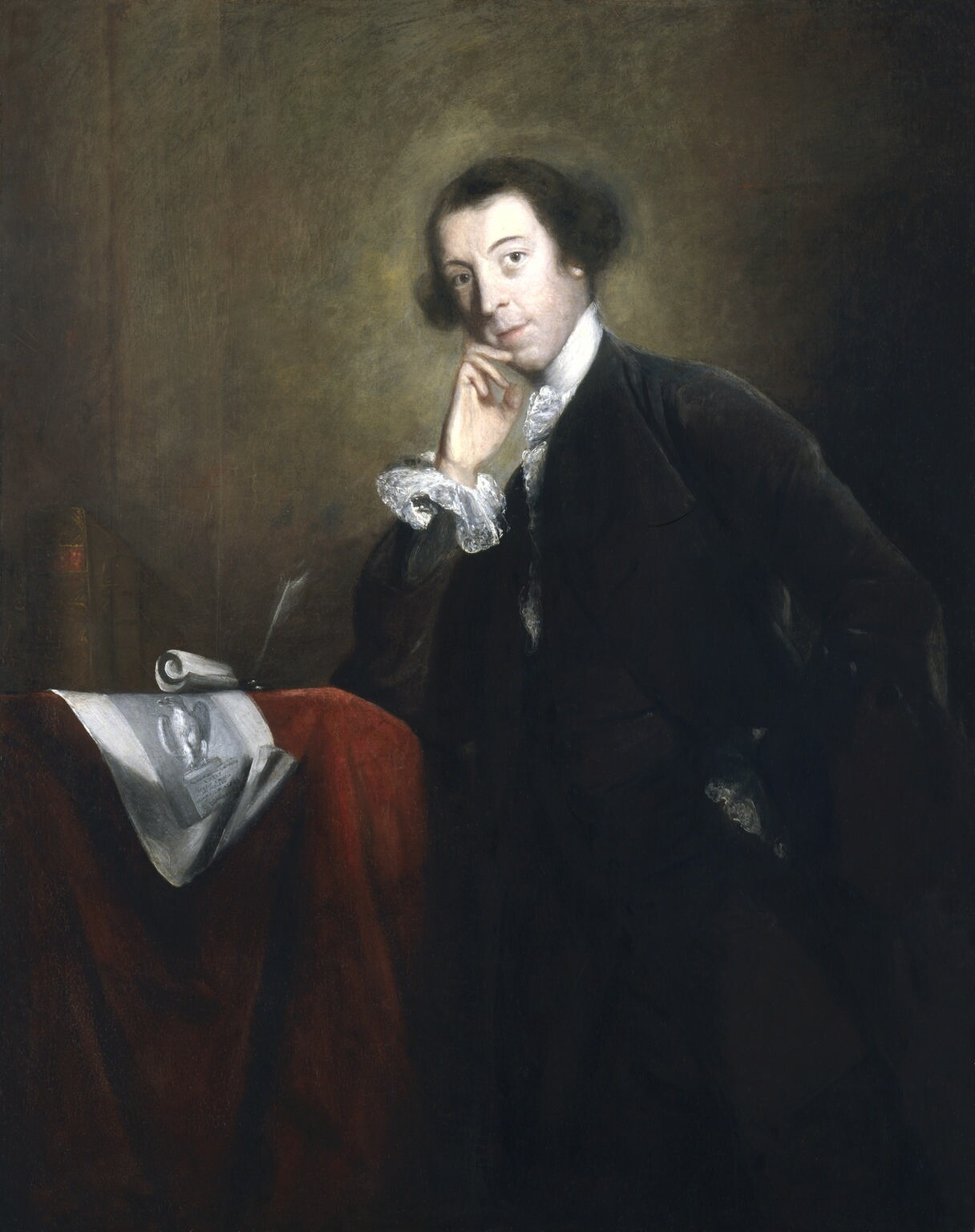
It's even odd to see the word "politicize" used in a positive way. I looked up the word (in the OED). The original meaning was "To engage in or talk about politics." That's an intransitive verb. You're not politicizing anything, just politicizing — gabbing about politics. It goes back to 1758. Horace Walpole, the 4th Earl of Orford, wrote: "But while I am politicizing, I forget to tell you half the purport of my letter."


The transitive verb, meaning "To make political" has spent most of its time referring to people — making them "politically aware or politically active." That goes back to 1846. The idea of making a subject matter political seems to be much more recent. The first example in the OED is from 1991: "Sociobiology was politicized at the outset by those who saw in it an elaborate argument for justifying a competitive, capitalist status quo." Timothy H. Goldsmith Biol. Roots Human Nature i. 5.

Now, I'm getting deeply into NYT archive, looking at the development of the word. The transitive verb referring to people spikes in 1968 in the context of politicizing students. (There's also talk of politicizing the Court and politicizing black people.) By the early 70s, I'm seeing references to politicizing the activities of persons — politicizing education, politicizing the Watergate investigation. The idea of politicizing an issue happens a bit later.

ADDED: I've gone through 1,000+ occurrences of "politicize" in the NYT archive, and I'll do another post showing you a lot of interesting things about it, but I want to complete this post by saying that I believe that Obama did something new. I can't find earlier examples of a high-level, newsworthy person saying that politicizing an issue is a good idea. I can find examples of people saying that it's a good idea to politicize people — to make them politically aware/active.

In the late 60s, there were lots of lefties who were excited about politicizing college students, and the yippies wanted to politicize hippies. But the later-developing idea of politicizing an issue is always somebody saying they don't want to politicize it, that they want to "de-politicize" it, or an attack on somebody else for politicizing it.

I did find this, from 1989, in a long article by the art critic Grace Glueck about the artist Jenny Holzer:
Holzer's real admirers among artists tend, naturally, to be those involved with newer forms. ''Her work is great, a bit ahead of its time,'' says Christoper Wool, a painter who last year began to make ''word drawings'' that deal with words as abstractions.... ''She has managed to politicize her art without losing the poetics of it. And she's made the light-emitting diodes so much her own that no one else can use them without evoking her work.''

Holzer... accepts the term ''political'' for her work. ''I hope it's political in the larger sense, not topical,'' she says. ''It deals with life-and-death issues; that's supposedly what politics are about.'' An avowed feminist, she is usually seen as part of a group of other strong female artists - Cindy Sherman, Louise Lawler and Kruger, among them - who in their work seem concerned about ''real world'' rather than fantasy subject matter, especially the might of military and corporate America.
Since feminism runs on the theory that "the personal is political," it makes sense to find the positive view of politicization in this context.