Tampilkan postingan dengan label art. Tampilkan semua postingan

Sabtu, 14 November 2015

It's not the most poorly timed NYT article ever, but this David Brooks article — "My $120,000 Vacation" — was published yesterday.

"Thanks to the Four Seasons’ new 24-day, round-the-world fantasy trip, you get all the indulgences of travel without any of its hassles. But like all fantasies, is this too much of a good thing?" Ugh. How embarrassing to find yourself — you, the moralizing columnist — asking that question on the day of the Paris attacks. I'd be smacking David Brooks around anyway, even if this were not published on a day when you pretty well know that the editors must have wished they could recall this one and publish it some other time.

It got me thinking back to September 11, 2001, a day when I spent the morning reading the paper NYT delivered to my doorstep. I calmly read it for an hour or two before setting off for work, not knowing what those who used TV or radio in the morning already knew. What was in the paper that morning? Maybe you remember: "No Regrets for a Love Of Explosives; In a Memoir of Sorts, a War Protester Talks of Life With the Weathermen":
''I don't regret setting bombs,'' Bill Ayers said. ''I feel we didn't do enough.'' Mr. Ayers, who spent the 1970's as a fugitive in the Weather Underground, was sitting in the kitchen of his big turn-of-the-19th-century stone house in the Hyde Park district of Chicago. The long curly locks in his Wanted poster are shorn, though he wears earrings. He still has tattooed on his neck the rainbow-and-lightning Weathermen logo that appeared on letters taking responsibility for bombings....

''Everything was absolutely ideal on the day I bombed the Pentagon,'' he writes. But then comes a disclaimer: ''Even though I didn't actually bomb the Pentagon -- we bombed it, in the sense that Weathermen organized it and claimed it.'...

Mr. Ayers has always been known as a ''rich kid radical."... Thinking back on his life, Mr. Ayers said, ''I was a child of privilege and I woke up to a world on fire. And hope and history rhymed.''
Terrible. Terrible beyond terrible timing, but what mind-crushingly bad timing. Brooks's bad timing is almost nothing compared to that. But still, it must pain him with a pain with which no one can sympathize that his effort traveling the world and cogitating about it appears in print at a point when no one will be enticed to share his broodings.

But so what if the Four Seasons slaps its brand on a package tour and you flit from place to place on a chartered jet? I don't see what's particularly posh about this. They keep plying him with champagne. He goes around the world stopping in Tokyo, Beijing, the Maldives, the Serengeti, St. Petersburg, Marrakesh and New York, because these are all places with Four Seasons hotels, so that's where you stay. Who are your co-travelers, these people who pay $120,000 each to be shuttled around like that and always assured of a stay in a Four Seasons hotel?
Each morning you get to choose from an array of options — a visit to a Russian ballet school? A tour of Nevsky Prospekt shopping street? An excursion to the Fabergé Museum? The people on this trip loved the experience. They were very satisfied customers.... The people on this trip were by and large on the lower end of the upper class. One had a family carpet business. Another was an I.T. executive at an insurance company. There were a few law partners....
Yes, thanks, David. This is what anyone can figure out from the description. $120,000 isn't really that much to spend for all this. It's kind of a bargain, a bargain with nice branding that effectively sends the message that one can see the world from inside a cocoon of protection. Who with $120,000 to spare falls for a pitch like that? The lower end of the upper class. Brooks is looking down on these people.
[T]hey were socially and intellectually unpretentious. They treated the crew as friends and equals and not as staff. Nobody was trying to prove they were better informed or more sophisticated than anybody else. There were times, in fact, when I almost wished there had been a little more pretense and a little more intellectual and spiritual ambition.
Almost wished? You wished it every moment, didn't you? These people were beneath you. A family carpet business. They didn't even know to treat the servants as servants. And, you, David Brooks, didn't know how to treat rather ordinary people as people.
The guests were delighted by the intricate wall carvings in the Royal Harem building in Istanbul, by the vegetables in a Turkish restaurant, by 15 minutes of opera in a Russian palace. But over dinner, they mostly spoke with their new friends about their kids and lives back home, not about the meaning and depth of what they had just seen. 
The rubes. They looked to each other for friendship and human contact. I wonder what they thought of the disapproving eminence from The New York Times. They visit the Hermitage and see Rembrandt’s "Return of the Prodigal Son" but nobody talks about the meaning of the familiar Bible story. They visit Ephesus but don't air their opinions about St. Paul, so Brooks is forced to tell us what he might have told the carpet people and their ilk:
Paul must have been regarded as an extreme religious crank, preaching a life of poverty and love. His antimaterialistic and anti-achievement message was diametrically opposed to the prevailing ethos of classical Rome, with its emphasis on wealth, power and grandeur.... It would have been nice to stand amid these ruins reading Paul, or to talk about how to reconcile material happiness with spiritual joy as we were on the very spot where Paul preached, where the ethos of Athens met the ethos of Jerusalem. But our guide never really told us Paul’s story. He spent most of his time instead taking us through the royal palaces, with the grand chambers, frescoes and meeting halls. He gave us those material facts about the place that tour guides specialize in (who built what when), but which no one remembers because they don’t really have anything to do with us emotionally. The Ephesus visit was an occasion to have a good discussion about how to live and what really lasts. But if anybody was thinking such thoughts, they went unexpressed.
And the anybodies included Brooks himself. America is full of people who would love to talk as long as you want about the meaning of Christianity. Why would "the very spot where Paul preached" get you closer to any significant meaning... especially from folks who opted into the Four-Seasons-branded package tour? But if you thought it was important — mystical? — to talk about Paul's ideas in the very place where he had them, why didn't you see fit to talk? Why didn't you think the people you were living with were worthy of conversation? Imagine what you could have said: I paid $120,000 to stand here and think about Paul, but Paul's ideas are in a book and I can read that book again, but I've read it already, and I know it's perfectly obvious that it would have been better for me to donate $120,000 to charities that serve the poor and stay in America and find the people who truly believe in Christianity and to talk about Paul with them, but I'm here now, and you are the people who are with me, and I want to hear what you think about Paul.

But Brooks keeps his opinions to himself until he gets home and puts it in writing, opening himself only to those of us who encounter him on the other side of text.

Kamis, 29 Oktober 2015

Paint me skeptical.

"An art exhibit in Italy has been restored after it was mistakenly binned by a cleaner. The artwork, named 'Where shall we go dancing tonight?'...  consisted of cigarette butts, empty champagne bottles and confetti. The museum has now re-installed the artwork after getting the artists' approval. The installation at the Museion Bozen-Bolzano was created by two artists from Milan to represent the hedonism and political corruption of the 1980s...."

That's from the BBC.

Sorry, I just don't believe this was an accident. This kind of thing has happened before, the cleanup is way too performance-y — photo caption: "The cleaner separated the glass, plastic and paper into individual bags" — and it works as it has before as a big publicity generator. I don't really like giving it publicity myself, but the BBC bought it, so who am I? I'm blogging to say I'm skeptical. Hedonism and political corruption of the 1980s, indeed.

Jumat, 23 Oktober 2015

"He lives simply, on 'the little bit of money' he inherited, and paints whatever he feels like."

"The canvases by his bathtub are of the 20 children gunned down three years ago at Sandy Hook Elementary School. 'The minute they got shot, I was crying and painting,' he says. 'I was going to paint just one girl and one boy, but then I felt guilty. What about the fat kid?' So he painted them all, grouping the portraits in one giant frame and showing it at Villanova University, where, he says, only three people came out on a snowy night to see it. He offered the paintings to Sandy Hook as a memorial, he says, but was rebuffed: 'So f–k ’em. If someone offers me $10 and is willing to hang it and respect it, I’ll give it to ’em.'"

Said Chuck Connelly, quoted in a NY Post article with a somewhat confusing headline "Inside the secret world of Scorsese’s art world nemesis." Connelly was the model for the raging artist played by Nick Nolte in Martin Scorsese's contribution to the film "New York Stories."

He was part of the 1980s art scene but withdrew, oddly, and now has 3,000 paintings hoarded at home.

Selasa, 13 Oktober 2015

Playboy gets rid of the pictures of naked ladies — because they're "just passé."

"As part of a redesign that will be unveiled next March, the print edition of Playboy will still feature women in provocative poses. But they will no longer be fully nude."
Its executives admit that Playboy has been overtaken by the changes it pioneered. “That battle has been fought and won,” said Scott Flanders, the company’s chief executive. “You’re now one click away from every sex act imaginable for free. And so it’s just passé at this juncture.”

For a generation of American men, reading Playboy was a cultural rite, an illicit thrill consumed by flashlight. Now every teenage boy has an Internet-connected phone instead....
Ah, the end of an era. My father was one of Playboy's original fans, going back to the first issue, which was in 1953. I was born in 1951, and I don't remember a time, growing up, when I didn't see Playboy openly displayed on the coffee table in the living room. Maybe somewhere there was "a generation of American men," ogling Playboy as "an illicit thrill," but my father, a member of "the greatest generation," was an adult married man when the great magazine began, and I, a baby boomer, never saw the publication as illicit. The idea that the internet, with "every sex act imaginable for free," has ousted the naked ladies from Playboy seems rather absurd. But the magazine lives on, and cutting out the nudity seems to be a way to bring in the younger audience:
There will still be a Playmate of the Month, but the pictures will be “PG-13” and less produced — more like the racier sections of Instagram. “A little more accessible, a little more intimate,” [Flanders] said. It is not yet decided whether there will still be a centerfold.
Its sex columnist, [top editor Cory] Jones said, will be a “sex-positive female,” writing enthusiastically about sex. And Playboy will continue its tradition of investigative journalism, in-depth interviews and fiction.... Some of the moves, like expanded coverage of liquor, are partly commercial, Mr. Flanders admitted; the magazine must please its core advertisers. And all the changes have been tested in focus groups with an eye toward attracting millennials — people between the ages of 18 and 30-something, highly coveted by publishers. The magazine will feature visual artists, with their work dotted through the pages, in part because research revealed that younger people are drawn to art.
Good for you, younger people, drawn to art. At some point, perhaps, you've seen enough photography of nakedness, and drawing and painting are new. The Playboy I remember had plenty of art. All those cartoons... and Vargas.

Senin, 05 Oktober 2015

"Health Benefits of Tea? Here’s What the Evidence Says."

I'm linking to this (in the NYT) because I love the illustration.

Meade said: "I hope it doesn't give people seizures."

IN THE COMMENTS:  Adam said:
That illustration is of the world's most famous teapot!
Wow! That blew my mind. The link goes to "Utah Teapot":
The Utah teapot or Newell teapot is a 3D computer model that has become a standard reference object (and something of an in-joke) in the computer graphics community. It is a mathematical model of an ordinary teapot of fairly simple shape, that appears solid, cylindrical and partially convex. A teapot primitive is considered the equivalent of a "hello, world" program, as a way to create an easy 3D scene with a somewhat complex model acting as a basic geometry reference for scene and light setup. Many programming libraries even have functions dedicated to drawing teapots.
On clicking the link, Meade — who used to make teapots — said: "That's an ugly teapot." Then: "The 'actual Melitta teapot' is actually pretty good. It's a good form."

Jumat, 02 Oktober 2015

"Somebody somewhere will comment and say, Obama politicized this issue," said Obama.

"Well, this is something we should politicize. It is relevant to our common life together, to the body politic."
"When Americans are killed in mine disasters, we work to make mines safer. When Americans are killed in floods and hurricanes, we work to make communities safer. When roads are unsafe, we fix them. To reduce auto fatalities, we have seat belt laws because we know it saves lives," Obama said.

"So the notion that gun violence is somehow different, that our freedom and our Constitution prohibits any modest regulation of how we use a deadly weapon, when there are law-abiding gun owners across the country who could hunt and protect their families and do everything they do under such regulations. Doesn't make sense."
Of course, gun rights advocates are politicizing this in the other direction. It's entirely predictable. What's new is the clear statement: This is something we should politicize.

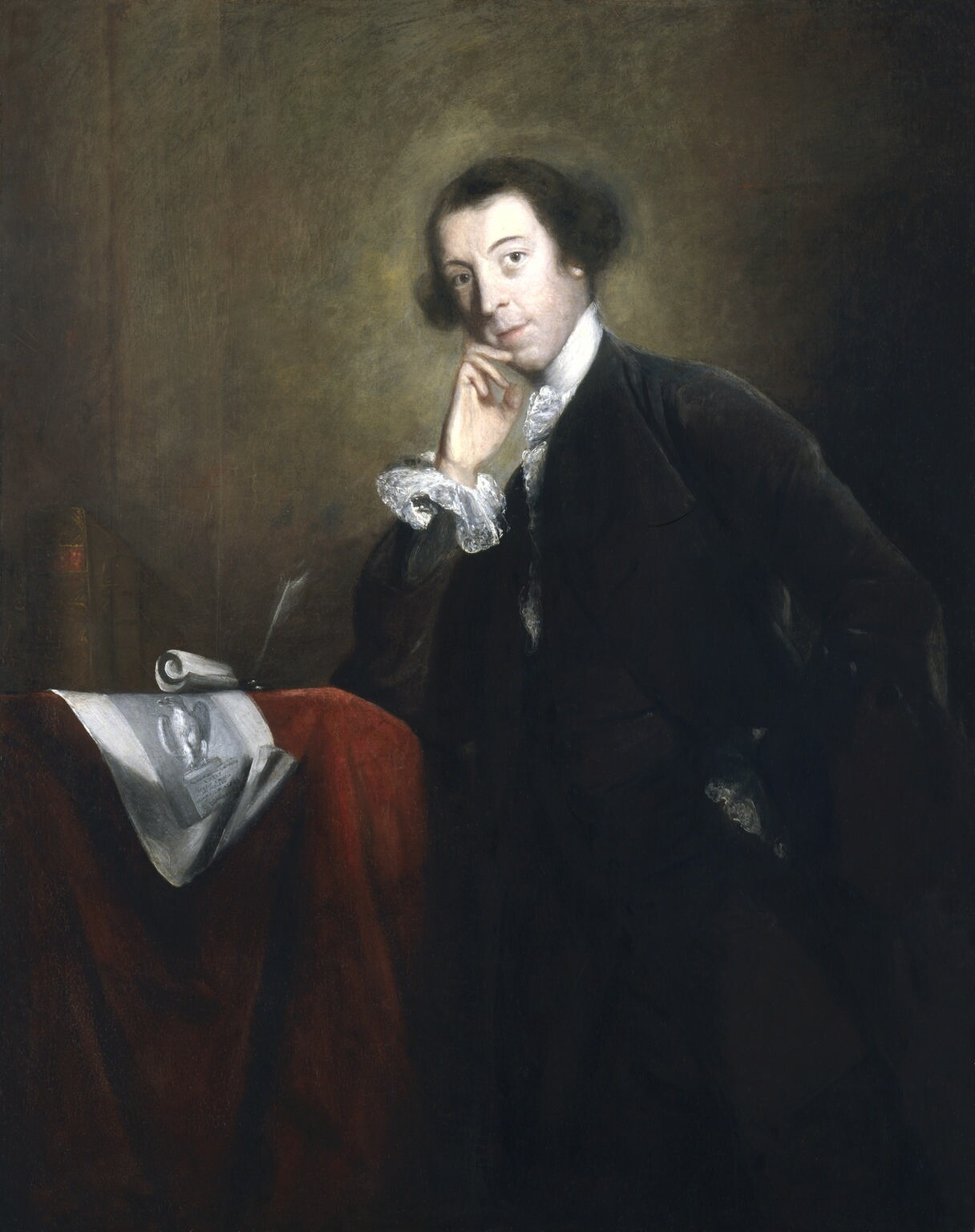
It's even odd to see the word "politicize" used in a positive way. I looked up the word (in the OED). The original meaning was "To engage in or talk about politics." That's an intransitive verb. You're not politicizing anything, just politicizing — gabbing about politics. It goes back to 1758. Horace Walpole, the 4th Earl of Orford, wrote: "But while I am politicizing, I forget to tell you half the purport of my letter."


The transitive verb, meaning "To make political" has spent most of its time referring to people — making them "politically aware or politically active." That goes back to 1846. The idea of making a subject matter political seems to be much more recent. The first example in the OED is from 1991: "Sociobiology was politicized at the outset by those who saw in it an elaborate argument for justifying a competitive, capitalist status quo." Timothy H. Goldsmith Biol. Roots Human Nature i. 5.

Now, I'm getting deeply into NYT archive, looking at the development of the word. The transitive verb referring to people spikes in 1968 in the context of politicizing students. (There's also talk of politicizing the Court and politicizing black people.) By the early 70s, I'm seeing references to politicizing the activities of persons — politicizing education, politicizing the Watergate investigation. The idea of politicizing an issue happens a bit later.

ADDED: I've gone through 1,000+ occurrences of "politicize" in the NYT archive, and I'll do another post showing you a lot of interesting things about it, but I want to complete this post by saying that I believe that Obama did something new. I can't find earlier examples of a high-level, newsworthy person saying that politicizing an issue is a good idea. I can find examples of people saying that it's a good idea to politicize people — to make them politically aware/active.

In the late 60s, there were lots of lefties who were excited about politicizing college students, and the yippies wanted to politicize hippies. But the later-developing idea of politicizing an issue is always somebody saying they don't want to politicize it, that they want to "de-politicize" it, or an attack on somebody else for politicizing it.

I did find this, from 1989, in a long article by the art critic Grace Glueck about the artist Jenny Holzer:
Holzer's real admirers among artists tend, naturally, to be those involved with newer forms. ''Her work is great, a bit ahead of its time,'' says Christoper Wool, a painter who last year began to make ''word drawings'' that deal with words as abstractions.... ''She has managed to politicize her art without losing the poetics of it. And she's made the light-emitting diodes so much her own that no one else can use them without evoking her work.''

Holzer... accepts the term ''political'' for her work. ''I hope it's political in the larger sense, not topical,'' she says. ''It deals with life-and-death issues; that's supposedly what politics are about.'' An avowed feminist, she is usually seen as part of a group of other strong female artists - Cindy Sherman, Louise Lawler and Kruger, among them - who in their work seem concerned about ''real world'' rather than fantasy subject matter, especially the might of military and corporate America.
Since feminism runs on the theory that "the personal is political," it makes sense to find the positive view of politicization in this context.