Tampilkan postingan dengan label feminism. Tampilkan semua postingan

Kamis, 12 November 2015

R. Crumb on Adam and Eve and his deal with a publisher to draw a comic of all of Genesis.

The word "stupid" comes up twice...


... Adam and Eve were stupid and so was that deal (because there's a lot more in Genesis than the vivid tale of Adam and Eve... and he's not really happy with the way he decided to draw God). Nice little video with a view into his work space (in France (not the one in the great old documentary)). Not really safe for work, of course, Adam and Eve being naked (until they realized they were naked).

Here's the book in case you don't already have it.

AND: There's an interview here. Excerpt:
"The hippie culture of Haight-Ashbury, where it all started for me, was full of men doing nothing all day and expecting women to bring them food. The ‘chick’ had to provide a home for them, cook meals for them, even pay the rent. It was still very much ingrained from the earlier patriarchal mentality of our fathers, except that our fathers, generally, were providers. Free love meant free sex and food for men. Sure, women enjoyed it, too, and had a lot of sex, but then they served men. Even among left-wing political groups, women were always relegated to secretarial, menial jobs. We were all on LSD, so it took a few years for the smoke to dissipate and for women to realize what a raw deal they were getting with the ne’er-do-well hippie male. Men who acquired preeminence at the time were all frauds, fake gurus who were paying lip service to peace and love, charismatic cons who just wanted to fuck all their adoring disciples. Timothy Leary was like that. A big phony."
ADDED: I was interested that Crumb drew a cover for The New Yorker on the subject of gay marriage that the magazine never published.  I'd like to see it! And: "The America that I missed died in about 1935... In the U.S [in the 1920s] there were thousands and thousands of bands, dance halls, ballrooms in hotels, restaurants had dance floors, school auditoriums, clubs in small towns. A small town of 10,000 would have a least a hundred bands. In the mid 30’s radio spread very fast in America and the depression killed a lot of the venues where live music was performed. You could go to the movies for 10 cents. Then in the 50’s TV finished it all off. Mass media makes you stay home, passive. In the 20’s there was live music everywhere in the States.... The current pop music in the Western world is just plain god-awful. America is long gone. The ’80s killed it for me. The Reagan era, AIDS. It was an awful decade."

MORE: You can see The New Yorker cover here, and it's pretty obvious that it's not at the right taste level. 
"[New Yorker editor David] Remnick would not give the reason for rejecting the cover, either to the cover editor, or to me. For this reason I refuse to do any more work for the New Yorker. I felt insulted, not so much by the rejection as for the lack of any reason given. I can't work for a publication that won't give you any guidelines or criterion for accepting or rejecting a work submitted. Does the editor want to keep you guessing or what? I think part of the problem is the enormous power vested in the position of chief editor of the New Yorker. He has been ‘spoiled' by the power that he wields. So many artists are so eager to do covers for the New Yorker that they are devalued in the eyes of David Remnick. They are mere pawns. He is not compelled to take pains to show them any respect. Any artist is easily replaced by another. Fortunately for me, I do not feel that I need the New Yorker badly enough to put up with such brusque treatment at the hands of its editor-in-chief. The heck with him!"
Crumb said that back in 2011. In the new interview, he's still pissed off at Remnick.

Rabu, 11 November 2015

"I was on a TV show, and Gloria Steinem didn’t even want to be on the stage with me. I was seen as a submissive slut."

"But I was a woman doing what I wanted to do. Isn’t that feminist? Some lady said to me, 'How could you shame yourself this way?' I said, 'I’m so sorry that you didn’t get to sleep with Mick Jagger and I did.' That shut her up."

From "Groupies, From Sex Symbols to Style Icons/When Pamela Des Barres and other backstage women came to prominence in 1969, the news media focused on their brazen sexuality. Now the focus is on their fashion" in the NYT.

"My wife's name is Janet. And when you say Janet yellin', I'm very familiar with what you mean."

Ugh. Did Mike Huckabee make a bad and really out of place joke at last night's debate.

That's the type of joke you used to hear all the time in the 1950s and 60s. In TV sitcoms and "The Ed Sullivan Show."

Senin, 09 November 2015

"Are We Raising Sexist Sons?"/"Do We Need to Change the Way We Raise Boys?"

Interesting alternative titles for a "Room for Debate" forum at the NYT.

"Are We Raising Sexist Sons?" is the front page teaser, with the subheading: "We’ve pushed our daughters to excel. But have we failed to teach inclusion to our boys?"

"Do We Need to Change the Way We Raise Boys?" is the title at the page where the forum begins (which is also marked "Updated"). When you click through to the individual essays — there are 5 — the sidebar gets us back to the title of the forum that appears on the front-page teaser: "Are We Raising Sexist Sons?" The subheading is different: "We've come so far in redefining gender roles and raising our daughters' expectations, but have we failed to teach inclusion to our boys?"

There's an interesting difference between pushing our daughters to excel (and the relationship to some failure to teach the boys to be inclusive (which might suggest that boys should back off on their own efforts to excel) and redefining gender roles (which doesn't seem to be squarely about striving to win in a competitive field that, when girls arrive, includes more players).

I haven't read all the essays yet, but I note the inclusion of Christina Hoff Sommers, a name that I think will prompt some clicks from some people who otherwise shun the NYT. Sommers says, "Rather than try to change the basic nature of boys, why not work with who they are?
[I]ntegrating football teams in junior high so girls have more options is hardly the most pressing equity issue in education. Boys are now the have-nots in education. The real challenge for the nation’s schools is to make the classroom more inclusive — for boys.
(The forum is kicked off by an anecdote about a boy who mocked a girl who wanted to play football.)

"Could there still be a lingering habit of trying to express our opinions in a certain way that doesn’t ‘offend’ or ‘scare’ men?"

"I’m over trying to find the ‘adorable’ way to state my opinion and still be likable. Fuck that."

Wrote the actress Jennifer Lawrence, trying to analyze why she hasn't received what seems to be comparable pay with male stars. She seems to admit that she doesn't drive a hard bargain...
“I failed as a negotiator because I gave up early,” she wrote. “I didn’t want to keep fighting over millions of dollars that, frankly, due to two franchises, I don’t need.”
... but she attributes her bad deal-making to the effect of the overall culture on women, the desire to be likable and not too demanding. You have to read through to the subtext here. Obviously, Jennifer Lawrence doesn't personally negotiate her deals. She's speaking as if she does to create pressure that her agents will use as they drive deals. Presumably, studios don't want the little people in the dark thinking of them as discriminating against women, and they may be willing to throw some money into that PR, even when they have the option of choosing another actress — a younger, prettier actress who'll do what you do and more and for even less, which is how you got your roles in the first place, remember?

AND: What about the invisible problem of male actors who never even get started because old, familiar actors keep getting the parts? 

Senin, 26 Oktober 2015

"The original languages didn't even have he and she. They didn't have concepts of masculine and feminine."

"People were people. And the whole idea was that we were in a circle together, not in a hierarchy together."

Said Gloria Steinem, in an Esquire interview. That quote struck me, having just read an article by Jane Kramer in The New Yorker called "Road Warrior/After fifty years, Gloria Steinem is still at the forefront of the feminist cause," which shows how central this idiosyncratic anthropology has been to Steinem. Steinem went to India for a 2-year fellowship after college and says she did her "first organizing there." She returned to India in 1974 and:
She had trekked to villages cordoned off by the government because of caste riots, and watched, at night, as the villagers emerged from mud huts to sit in circles, lit by kerosene lamps, and tell their stories of burnings, murders, thefts, and rapes, “with fear and trauma that needed no translation” but with the relief that came from talking and being heard. In her road book, she calls it “the first time I witnessed the ancient and modern magic of talking circles, those groups in which anyone may speak in turn, everyone must listen, and consensus is more important than time.”
Also:
[Wilma] Mankiller had been the first elected chief of the Cherokee Nation, and she and Steinem had been close ever since she joined the board of the Ms. Foundation. Over the years, Mankiller had become, for Steinem, a kind of spiritual guide.... It was Mankiller, she says, who continued her education in the “deep history” of matrilineality, and the communal talking circles that expressed it. “We have always started our ‘history’ with when hierarchy, patriarchy, and nationalism started,” Steinem told me. “But democracy did not come from Greece. It is much, much older, and it came from women and men together.” She added, “The Iroquois Confederacy had circles of consensus—it was matrilineal.”
Before Mankiller died in 2010, she was working on a writing a book with Steinem, and Steinem wants to continue the project:
“I want to contribute our idea that most of human history was very different from what we have today, with our monotheistic patriarchies and their ‘pyramid’ structures of authority from the top,” [Steinem] said. “Many peoples were—and some still are—not gender-based in their languages. And there was rarely a single chief. There was always a chief for peace, and a different one for war. Their societies were not polarized, and not violence-based.” The jury is out on that. Many archeologists and anthropologists would disagree. But, as an organizing principle for Steinem, and for the feminists she has brought together, the evocation of an ancient tradition of talking circles for sharing stories, bridging differences, and coming to acceptable common solutions has been a remarkably effective tool.
Many archeologists and anthropologists would disagree.... but it's not science, is it? It's mythology. Mythology is a different process. When Steinem says she "witnessed the ancient and modern magic of talking circles," we're witnessing the ancient and modern magic of mythology.

By the way, this fascination with the imagined better world of India and the Cherokee and the Iroquois is stereotypical of the 1960s. The hippies had the same dream. Steinem is not a hippie. Her cultural stream diverged from the hippie philosophy. I remember when that divergence occurred. At the time I thought the Ms. Magazine people were retro, missing the zeitgeist, the counterculture. If we were shedding "concepts of masculine and feminine," getting together and loving one another, why heighten the sense of the differentness of women, why talk about the oppression of the kinds of families our parents lived in — we were already free — and why go on and on about careers — when the point was to drop out?

ADDED: That line "the villagers emerged from mud huts to sit in circles" made me think of the old Camille Paglia lines: "If civilization had been left in female hands, we would still be living in grass huts" and "Trying to build a sex theory without studying Freud, women have made nothing but mud pies."

Minggu, 25 Oktober 2015

Opinions voiced about voices — the shouting woman (Hillary) and the quiet man (Ben Carson).

On "State of the Nation" this morning, Jake Tapper, interviewing Bernie Sanders, played a video clip of Hillary Clinton getting off a great feminist sound bite: "I've been told to stop, and I quote, 'shouting about gun violence.' Well, first of all, I'm not shouting. It's just when women talk some people think we're shouting."
TAPPER: She's basically calling you a sexist... You're the one she's quoting, Senator Sanders. She is suggesting in public that you have a problem with women speaking out.

SANDERS: Well, you know, all that I can say is I am very proud of my record on women's issues. I certainly do not have a problem with women speaking out. And I think what the secretary is doing there is taking words and misapplying them. What I was saying is if we are going make some progress on dealing with these horrific massacres that we're seeing, is that people have got to stop all over this country talking to each other. It's not Hillary Clinton. You have some people who are shouting at other people all across this country. You know that. This nation is divided on this issue. ...What I was talking about, clearly, across this country you've got people shouting at each other. 
On "Meet the Press" this morning, Chuck Todd, interviewing Ben Carson, played a video clip of Donald Trump mocking: "We have a breaking story: Donald Trump has fallen to second place behind Ben Carson. We informed Ben, but he was sleeping." Asked to respond, Carson said:
DR. BEN CARSON: You know, everybody has their own personality. And if he'd like to do that, that's fine. That's not who I am. And I don't get into the mud pit. And I'm not going to be talking about people. I will tell you in terms of energy I'm not sure that there's anybody else running who's spent 18 or 20 hours intently operating on somebody.

CHUCK TODD: Do you think that people mistaken your soft-spokenness with a lack of energy?

DR. BEN CARSON: I think so. I have plenty of energy. But, you know, I am soft-spoken. I do have a tendency to be relaxed. I wasn't always like that. There was a time when I was, you know, very volatile.... As a teenager, I would go after people with rocks, and bricks, and baseball bats, and hammers. And, of course, many people know the story when I was 14 and I tried to stab someone. And, you know, fortunately, you know, my life has been changed. And I'm a very different person now.

Sabtu, 24 Oktober 2015

"What they are saying is that because I don’t think surgery will turn a man into a woman I should not be allowed to speak anywhere."

Said Germaine Greer.
Addressing claims that she had been hurtful towards transgender women, Greer added: “People are being hurtful to me all the time. Try being an old woman. For goodness sake, people get hurt all the time. I’m not about to walk on eggshells.”...

Asked about the petition [to stop her from speaking at Cardiff University, she said]: “I don’t really know what I think of it. It strikes me as a bit of a put-up job really because I am not even going to talk about the issue that they are on about."
The link goes to The Guardian, where the article is illustrated by a photo of Greer, in fully wrinkled old-lady form, next to a photo of Caitlyn Jenner that's been photoshopped beyond recognition to the point of looking like a 30-year-old. 

More here: "I don’t expect people to agree with me. On the other hand, I don’t expect them to throw things at me.... I just don’t think that surgery turns a man into a woman. A perfectly permissable view. I mean, an un-man is not necessarily a woman. We don’t really know what women are and I think that a lot of women are female impersonators, because our notion of who we are is not authentic, and so I am not surprised men are better at impersonating women than women are. Not a surprise, but it’s not something I welcome."

I'm especially interested in the propositions: 1. "We don’t really know what women are," and 2. "a lot of women are female impersonators." And, by the way, once you have this level of skepticism, the opinion about transgender people becomes almost meaningless. Greer doesn't seem ready to concede even that women are women.

AND: Elsewhere in The Guardian today, there's "From Twiggy to Germaine Greer: eight classic images of powerful women/The Design Museum’s new exhibition, Women Fashion Power, about the way influential women wear clothes opens on Wednesday. Here, from Twiggy in a trouser suit to the high-shine shoulderpads of Dynasty, eight women write about the most eye-catching looks in the show." The photo of Greer shows her at the age of about 36. The text is fully celebratory:
Click for more »

Selasa, 20 Oktober 2015

"Why sex that’s consensual can still be bad. And why we’re not talking about it."

I know: newsflash. But the fact that consent is not enough to make sex good is received as news by anybody is what's interesting. It's also valuable to understand how some people got stuck on the consent/nonconsent distinction when there are so many other issues to examine.

The article, at New York Magazine, is by Rebecca Traister.
It may feel as though contemporary feminists are always talking about the power imbalances related to sex, thanks to the recently robust and radical campus campaigns against rape and sexual assault. But contemporary feminism’s shortcomings may lie in not its over­radicalization but rather its under­radicalization. Because, outside of sexual assault, there is little critique of sex. Young feminists have adopted an exuberant, raunchy, confident, righteously unapologetic, slut-walking ideology that sees sex — as long as it’s consensual — as an expression of feminist liberation. The result is a neatly halved sexual universe, in which there is either assault or there is sex positivity. Which means a vast expanse of bad sex — joyless, exploitative encounters that reflect a persistently sexist culture and can be hard to acknowledge without sounding prudish — has gone largely uninterrogated, leaving some young women wondering why they feel so fucked by fucking.

Minggu, 18 Oktober 2015

"My guess is that many women my age brokered a series of compromises, shaving our legs (but only when people would see them)..."

"... performing oral sex like porn stars but insisting on reciprocity (because Betty Friedan would have wanted it that way). We’d drink shots in short skirts, but we’d come up with a series of code words and signals so that our girlfriends could steer us safely home; we’d go teetering down the streets in our cutest, highest heels but clutching cellphones and a bristling fistful of keys as we walked; trying to have it all, do it all, be it all, sometimes without even figuring out which parts of it felt good or right or authentically pleasurable."

Just one paragraph from "Longing for the Innocence of Playboy," by Jennifer Weiner.

Kamis, 15 Oktober 2015

"All I hear and see all day are men speaking their opinions, and I give mine in the same exact manner, and you would have thought I had said something offensive."

Said Jennifer Lawrence, who only "spoke my mind and gave my opinion in a clear and no-[BS] way; no aggression, just blunt" and was met with the response (from a male co-worker): "'Whoa! We’re all on the same team here!' As if I was yelling at him."

Yes, I know, you're going to doubt whether the way she spoke was really "in the same exact manner" that she'd heard from males. We weren't there. We don't know. But it does seem that woman are expected to pad their statements for the comfort of others and when we don't, it can be disconcerting. You can leverage that power, you know! You don't have to take care of others. And of course, by talking about it, Lawrence is declining to serve in the role of caring nurturer.

At the link, a WaPo columnist named Alexandra Petri attempts some humor by translating famous lines into the form of speech supposedly expected of a woman in a meeting. E.g.:
“Give me liberty, or give me death.”
Woman in a Meeting: “Dave, if I could, I could just — I just really feel like if we had liberty it would be terrific, and the alternative would just be awful, you know? That’s just how it strikes me. I don’t know.”
It's not like men can just say “Give me liberty, or give me death” at a meeting, and, in fact, Patrick Henry had a lot of verbiage padding the remembered line. And even that sentence had a blabby intro clause easing the bluntness: "I know not what course others may take; but as for me..." That's not that different from Petri's "That’s just how it strikes me...."

How objective are we, really, about the bluntness of other people's speech in comparison to our own? Of course, we are subjective, but that brings us back to Jennifer Lawrence's point: Part of our subjectivity in how we hear others is our response to their gender. That's the texture and energy of human life. It will not be eradicated. But we can be more aware and make better music.

Rabu, 14 Oktober 2015

Bernie Sanders made "a Kinsley gaffe—where a politician accidentally reveals a truth he did not intend to admit."

Says Katherine Mangu-Ward at Reason.com. What Sanders said was: "Every other major country on Earth, every one, including some small countries, say that when a mother has a baby, she should stay home with that baby."

Does Mangu-Ward mean that Sanders actually thinks the mother should stay home with the baby or did she mean to say it's actually true that the mother should stay home with the baby? If she only meant the former, didn't she make a Kinsley gaffe?

Senin, 12 Oktober 2015

"You're carrying a gun to class? Yeah well I'm carrying a HUGE DILDO."

University of Texas student begins what she calls #CocksNotGlocks, a protest against the new Texas law permitting the licensed concealed carrying of guns on campus. The protest is accomplished by "strapping gigantic swinging dildos to our backpacks."

Unlike the guns, the dildos are not concealed. They are out there in your face, including the faces of those who — in other contexts — urge us to become sensitized to sexual aggression. How is a rape survivor supposed to feel sitting next to students with "gigantic swinging dildos" hanging from their backpacks? And what of the men who have cared about the critique of the "rape culture"? What are they to think seeing their private parts likened to weaponry and bandied about in disembodied form detached from the feeling, caring body of a human being? And why the specification that the dildos be "gigantic"? Is this not body-shaming the vast majority of men, taunting them with a thoroughly unattainable standard?

Sabtu, 10 Oktober 2015

"Can we blame the mother of Adam Lanza... Can we blame the mother of the Oregon shooter...?"

Asks Timothy Egan in the NYT.
What about the fathers? Gov. Bobby Jindal of Louisiana said the Oregon shooter’s father, divorced and absent for some time from his son, was “a failure” who “owes us all an apology.” Fathers certainly have an equal responsibility. But it’s the mothers, in most cases, who know the names of their children’s teachers, who understand their deepest fears, who have a unique relationship.
Hmm. The "unique relationship" the mother has is a consequence of the father's failure. If the point is to stop future harm, then all causal factors matter.

But Egan is doing gender politics and advocating for gun control. He's getting the NYT reader's attention by beginning with something transgressive. He dares to blame the woman. But then he drives a wedge, the wedge that men have driven through the ages: There are good women and bad women.
A group, Moms Demand Action for Gun Sense in America, was formed after the Newtown carnage. It’s a good counter to the creepy cultists of the gun culture. Their best appeal is likely to be one of reason to the hearts of fellow mothers, rather than to heartless politicians at the legislative level.
The bad women consort with the dirty men, the "creepy cultists." The good women have "hearts" — they are the wholesome bulwarks of goodness.

When a man makes an appeal to the womanhood of women, to the motherhood of mothers — be a good woman, be a good mother — that is patriarchy speaking.

Sabtu, 03 Oktober 2015

"Why Did the Greatest Feminist Actress Deny Being a Feminist?"

"While promoting the movie Suffragette, [Meryl] Streep was asked if she is a feminist. ‘I am a humanist,’ she replied, further fueling the misguided belief that ‘feminist’ is a dirty word."

I am a humanist! That's like saying "All lives matter" when someone asks whether "Black lives matter." So Meryl's in trouble with the good-thinking people, and just when she's got a movie called "Suffragette."

Here's the full interview. Excerpts:
Is being ladylike overrated?
‘I would say it is underrated. Grace, respect, reserve and empathetic listening are qualities sorely missing from the public discourse now.’...

Are you a feminist?
‘I am a humanist, I am for nice easy balance.’...

What single thing would you change about the film industry to make it less sexist?
‘Men should look at the world as if something is wrong when their voices predominate. They should feel it. People at agencies and studios, including the parent boards, might look around the table at the decision-making level and feel something is wrong if half their participants are not women. Because our tastes are different, what we value is different. Not better, different.’
Back to the first link, which goes to a column in The Daily Beast by (the delightfully named) Teo Bugbee:
So what is it that’s so undesirable about the word feminist?... The common refrain in moments such as these is that feminism is simply a belief in equal rights. 
(That's a subject we were just talking about yesterday (here). And it's the way Hillary Clinton defined feminism recently.)
And while that is true, it’s also a vast oversimplification of the history of a movement that has had time to develop over the course of a century. There is not one feminism, but many feminisms...
That plural — "feminisms" — which you don't see that much these days, was big in the late 1980s, back when I was one of the many women who felt compelled to read and understand the book "New French Feminisms." The plural was both a burden and a relief: a burden, because it's complicated (and perhaps French!), but a relief because you could use the word your own special way, take charge of the meaning creation, and not have to give yourself to a big group of ideological enforcers.

Bugbee proceeds to distance herself from one particular 80s feminist, Andrea Dworkin, "the radical feminist most often cited when critics of feminism want to find a feminist who is explicitly anti-man." Bugbee assures us that almost no feminist today believes in "radical separatism," so it bothers her "that women are denying feminism because of even the possibility that they might find themselves in a world where they must align themselves against men."

I'd say Streep and others who decline the label are not so much "denying feminism" as wanting to remain independent of a terms that other people are actively defining and enforcing. It seems risky and troublesome: You'll have to keep an eye on them lest they cause you to seem to be saying something you don't want to say. An artist, e.g., Streep, can't be distracted by monitoring all these politcos and web-scribblers.

Bugbee proceeds to talk in a completely political way about liberal issues like funding Planned Parenthood and passing equal-pay laws — that is, to be the very kind of ideological enforcer who makes people worry about the consequences of accepting the "feminist" label... which is the likely answer to the "why" question in the post title.

Jumat, 02 Oktober 2015

"Somebody somewhere will comment and say, Obama politicized this issue," said Obama.

"Well, this is something we should politicize. It is relevant to our common life together, to the body politic."
"When Americans are killed in mine disasters, we work to make mines safer. When Americans are killed in floods and hurricanes, we work to make communities safer. When roads are unsafe, we fix them. To reduce auto fatalities, we have seat belt laws because we know it saves lives," Obama said.

"So the notion that gun violence is somehow different, that our freedom and our Constitution prohibits any modest regulation of how we use a deadly weapon, when there are law-abiding gun owners across the country who could hunt and protect their families and do everything they do under such regulations. Doesn't make sense."
Of course, gun rights advocates are politicizing this in the other direction. It's entirely predictable. What's new is the clear statement: This is something we should politicize.

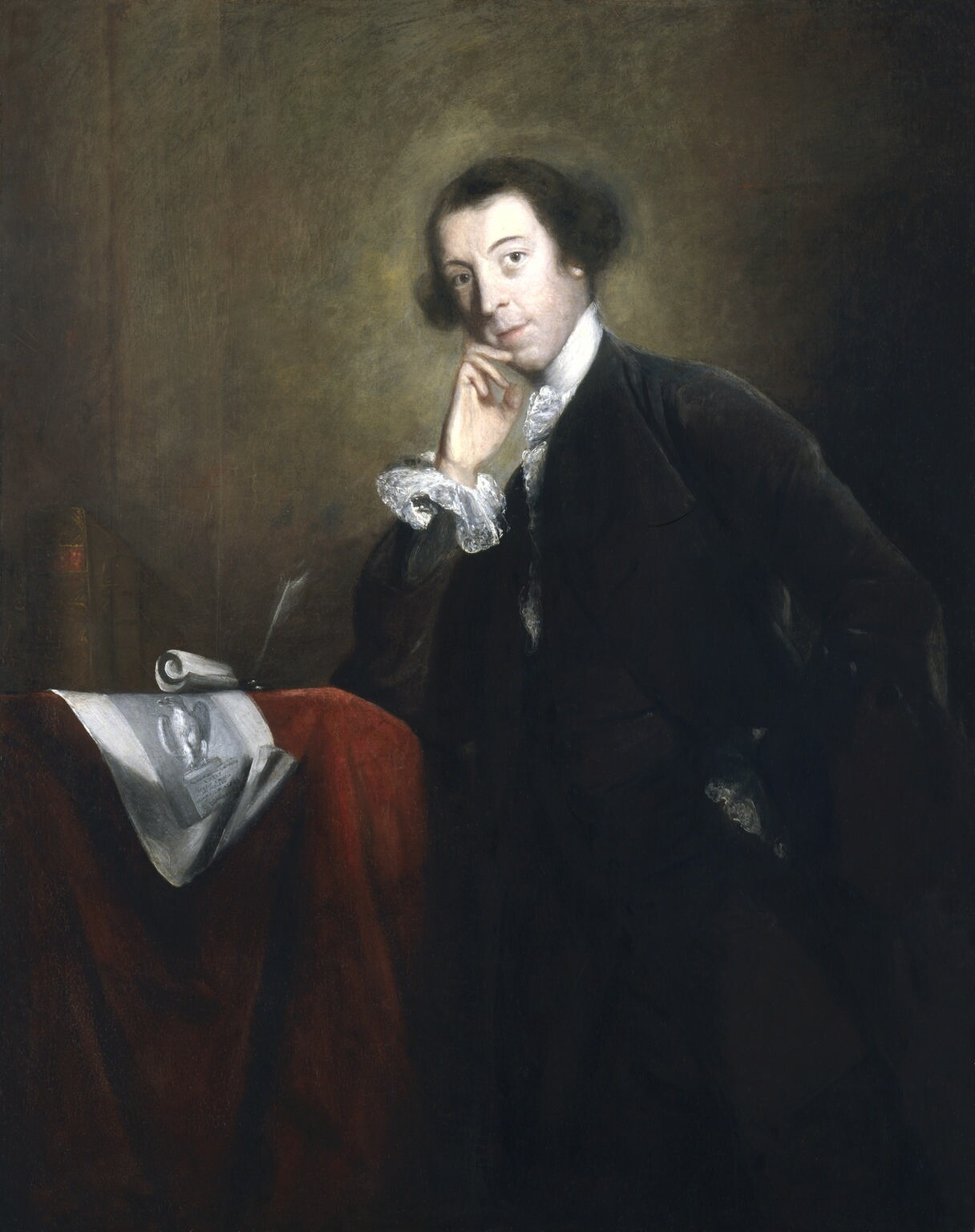
It's even odd to see the word "politicize" used in a positive way. I looked up the word (in the OED). The original meaning was "To engage in or talk about politics." That's an intransitive verb. You're not politicizing anything, just politicizing — gabbing about politics. It goes back to 1758. Horace Walpole, the 4th Earl of Orford, wrote: "But while I am politicizing, I forget to tell you half the purport of my letter."


The transitive verb, meaning "To make political" has spent most of its time referring to people — making them "politically aware or politically active." That goes back to 1846. The idea of making a subject matter political seems to be much more recent. The first example in the OED is from 1991: "Sociobiology was politicized at the outset by those who saw in it an elaborate argument for justifying a competitive, capitalist status quo." Timothy H. Goldsmith Biol. Roots Human Nature i. 5.

Now, I'm getting deeply into NYT archive, looking at the development of the word. The transitive verb referring to people spikes in 1968 in the context of politicizing students. (There's also talk of politicizing the Court and politicizing black people.) By the early 70s, I'm seeing references to politicizing the activities of persons — politicizing education, politicizing the Watergate investigation. The idea of politicizing an issue happens a bit later.

ADDED: I've gone through 1,000+ occurrences of "politicize" in the NYT archive, and I'll do another post showing you a lot of interesting things about it, but I want to complete this post by saying that I believe that Obama did something new. I can't find earlier examples of a high-level, newsworthy person saying that politicizing an issue is a good idea. I can find examples of people saying that it's a good idea to politicize people — to make them politically aware/active.

In the late 60s, there were lots of lefties who were excited about politicizing college students, and the yippies wanted to politicize hippies. But the later-developing idea of politicizing an issue is always somebody saying they don't want to politicize it, that they want to "de-politicize" it, or an attack on somebody else for politicizing it.

I did find this, from 1989, in a long article by the art critic Grace Glueck about the artist Jenny Holzer:
Holzer's real admirers among artists tend, naturally, to be those involved with newer forms. ''Her work is great, a bit ahead of its time,'' says Christoper Wool, a painter who last year began to make ''word drawings'' that deal with words as abstractions.... ''She has managed to politicize her art without losing the poetics of it. And she's made the light-emitting diodes so much her own that no one else can use them without evoking her work.''

Holzer... accepts the term ''political'' for her work. ''I hope it's political in the larger sense, not topical,'' she says. ''It deals with life-and-death issues; that's supposedly what politics are about.'' An avowed feminist, she is usually seen as part of a group of other strong female artists - Cindy Sherman, Louise Lawler and Kruger, among them - who in their work seem concerned about ''real world'' rather than fantasy subject matter, especially the might of military and corporate America.
Since feminism runs on the theory that "the personal is political," it makes sense to find the positive view of politicization in this context.

"Carly Fiorina has feminists on the defensive."

"Once you realize that most of what’s marketed as feminism in the United States is just Democratic Party agitprop, this all makes sense. So does the New York Times’ lopsided 4-against-1 debate format."

Says Glenn Reynolds linking to a NYT "Room for Debate" collection of 5 essays on the topic "Is Carly Fiorina a Feminist?" I'll take his word for it that only 1 of the 5 answers yes.

I had a flashback to the time I was invited to write for a collection like this. I think the question was "Who is a feminist?" I forget what current issue made that seem like the right question to ask, and I'm sure my answer was something along the lines of: It depends on how you define the term.

20 minutes later... That was surprisingly hard to find. The question was "Who Gets To Be a Feminist?" — which is a a strange way to put it, suggesting that there's a gate-keeper deciding who's allowed in the club. It was in DoubleX at Slate back in October 2010. I wrote:
Click for more »

Rabu, 30 September 2015

"In a bid to seem less stuffy... Hillary Clinton is chatting with Lena Dunham about the singer Lenny Kravitz’s penis."

Writes Frank Bruni — warring on women? — in his column in The New York Times.
The interview itself covers Clinton’s biography and some serious terrain, including feminism and the relationship between African-Americans and the police.
So why are you disrespecting these women, Frank?
But it’s in large part a Dunham-Clinton love-in, a pajama party minus the pajamas, ostensibly in keeping with the Clinton campaign’s recent pledge to roll out a warmer, funnier version of the candidate.
When women have a friendly discussion with each other, you for some reason feel compelled to picture them in pajamas — to call it a pajama party? I'm having a flashback to the 1970s (and even the 1980), when men seeing women talking to each other just had to call it a "kaffeeklatsch." You could be in a professional occupation, and a man might walk into the room, see 2 or 3 women talking to each other and say: "Oh? Is this the kaffeeklatsch?"
In the promotional video, Clinton kids that because Dunham’s newsletter and the website associated with it are called Lenny, she half expected that the person coming to question her might be Kravitz.

Dunham then mentions some viral footage of a Kravitz wardrobe malfunction: “His stuff fell out of his pants.”

Clinton feigns fascination. “I’ll look for that,” she says.
Well, now, they are making the man a sex object. So that's a problem. A bigger problem for Hillary is that talking about a man who can't keep his penis in his pants makes me think of Bill Clinton.

From the second-most-liked comment over there:
Bruni, if you want to make constructive use of your valuable column inches, instead of the kind of comments you might throw over your shoulder at a dinner party, study a specific set of issues and review with people who know about the subjects (not with the shallow partisan talking heads) what each candidate plans to do about the issue.
The reason he doesn't want to do that is the same reason I want to say valuable column inches... there's a phrase.