Tampilkan postingan dengan label rhetoric. Tampilkan semua postingan

Minggu, 15 November 2015

It's not too hard to follow the political sleight of hand when it's Bernie Sanders prestidigitating.

From the transcript of last night's debate:
JOHN DICKERSON: Senator Sanders, you said you wanna rid the planet of ISIS. In the previous debate you said the greatest threat to national security was climate change. Do you still believe that?

BERNIE SANDERS: Absolutely. In fact, climate change is directly related to the growth of terrorism. And if we do not get our act together and listen to what the scientists say you're gonna see countries all over the world-- this is what the C.I.A. says, they're gonna be struggling over limited amounts of water, limited amounts of land to grow their crops. And you're gonna see all kinds of international conflict. But of course international terrorism is a major issue that we've got to address today. And I agree with much of what-- the secretary and-- and the governor have said. Only have one area of-- of disagreement with the secretary. I think she said something like, "The bulk of the responsibility is not ours." Well, in fact, I would argue that the disastrous invasion of Iraq, something that I strongly opposed, has unraveled the region completely. And led to the rise of Al Qaeda-- and to-- ISIS. Now, in fact, what we have got to do-- and I think there is widespread agreement here-- 'cause the United States cannot do it alone. What we need to do is lead an international coalition which includes-- very significantly-- (UNINTEL) nations in that region are gonna have to fight and defend their way of life.
Okay, let's look at that in slow motion. Stand by your former statement boldly and clearly"
Absolutely.
Open an escape path:
In fact, climate change is directly related to the growth of terrorism.
The former statement, which now sounds wrong, is that X is the most important thing, but now people have reason to feel, very urgently, that Y is the most important thing. Create a springboard for yourself. Invite the audience to think that X and Y are really the same thing. That's tantalizing. They're looking to see this fascinating connection, so begin to create the feeling that X and Y are connected:
And if we do not get our act together and listen to what the scientists say you're gonna see countries all over the world-- this is what the C.I.A. says, they're gonna be struggling over limited amounts of water, limited amounts of land to grow their crops. And you're gonna see all kinds of international conflict. 
Climate change isn't just about what the climate does but how people react to it, and there will be struggle and conflict, and that at least vaguely reminds us of the bloodshed associated with ISIS, but ISIS isn't fighting over the temperature. You can't get to that escape path, climate change is directly related to the growth of terrorism.

So just act as though you've already arrived where you've said you'd go, and who cares if X or Y is more important? You've said X is important, so plunge right ahead and say Y is important:
But of course international terrorism is a major issue that we've got to address today. 
And then collapse into drivel. You agree with Clinton and you don't agree. What was the part that you disagreed with, that "The bulk of the responsibility is not ours"?
Well, in fact, I would argue that the disastrous invasion of Iraq, something that I strongly opposed, has unraveled the region completely. 
So you think bulk of the responsibility is ours?!
And led to the rise of Al Qaeda-- and to-- ISIS. 
The invasion of Iraq led to the rise of al Qaeda?! You're faltering badly, but you know there are magic words — 2 words that if only you can just get to them you've done your trick. Come on, Bernie:
Now, in fact, what we have got to do-- and I think there is widespread agreement here-- 'cause the United States cannot do it alone. What we need to do is lead an international coalition...
APPLAUSE!!!!

Sabtu, 10 Oktober 2015

"Can we blame the mother of Adam Lanza... Can we blame the mother of the Oregon shooter...?"

Asks Timothy Egan in the NYT.
What about the fathers? Gov. Bobby Jindal of Louisiana said the Oregon shooter’s father, divorced and absent for some time from his son, was “a failure” who “owes us all an apology.” Fathers certainly have an equal responsibility. But it’s the mothers, in most cases, who know the names of their children’s teachers, who understand their deepest fears, who have a unique relationship.
Hmm. The "unique relationship" the mother has is a consequence of the father's failure. If the point is to stop future harm, then all causal factors matter.

But Egan is doing gender politics and advocating for gun control. He's getting the NYT reader's attention by beginning with something transgressive. He dares to blame the woman. But then he drives a wedge, the wedge that men have driven through the ages: There are good women and bad women.
A group, Moms Demand Action for Gun Sense in America, was formed after the Newtown carnage. It’s a good counter to the creepy cultists of the gun culture. Their best appeal is likely to be one of reason to the hearts of fellow mothers, rather than to heartless politicians at the legislative level.
The bad women consort with the dirty men, the "creepy cultists." The good women have "hearts" — they are the wholesome bulwarks of goodness.

When a man makes an appeal to the womanhood of women, to the motherhood of mothers — be a good woman, be a good mother — that is patriarchy speaking.

Jumat, 02 Oktober 2015

"Somebody somewhere will comment and say, Obama politicized this issue," said Obama.

"Well, this is something we should politicize. It is relevant to our common life together, to the body politic."
"When Americans are killed in mine disasters, we work to make mines safer. When Americans are killed in floods and hurricanes, we work to make communities safer. When roads are unsafe, we fix them. To reduce auto fatalities, we have seat belt laws because we know it saves lives," Obama said.

"So the notion that gun violence is somehow different, that our freedom and our Constitution prohibits any modest regulation of how we use a deadly weapon, when there are law-abiding gun owners across the country who could hunt and protect their families and do everything they do under such regulations. Doesn't make sense."
Of course, gun rights advocates are politicizing this in the other direction. It's entirely predictable. What's new is the clear statement: This is something we should politicize.

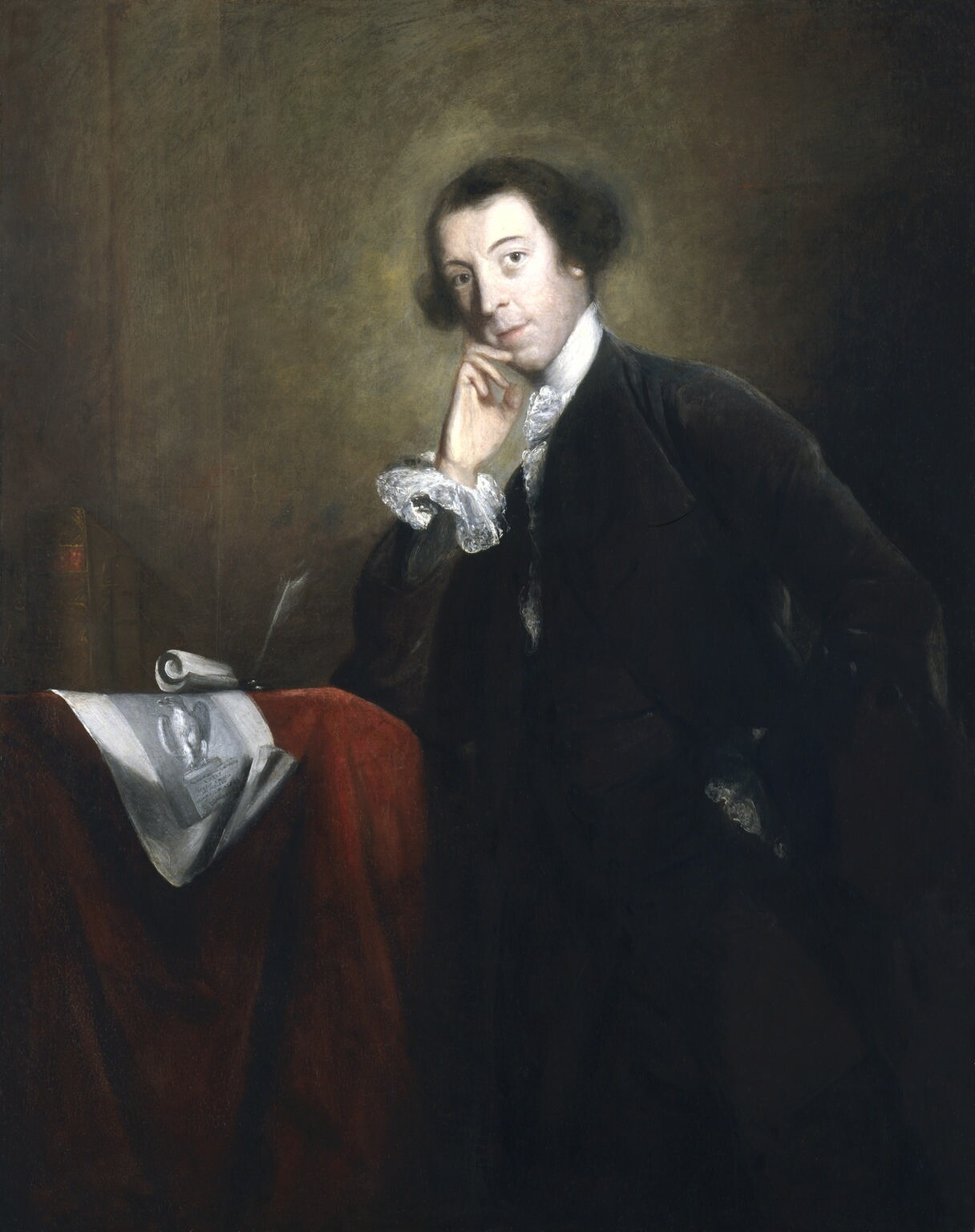
It's even odd to see the word "politicize" used in a positive way. I looked up the word (in the OED). The original meaning was "To engage in or talk about politics." That's an intransitive verb. You're not politicizing anything, just politicizing — gabbing about politics. It goes back to 1758. Horace Walpole, the 4th Earl of Orford, wrote: "But while I am politicizing, I forget to tell you half the purport of my letter."


The transitive verb, meaning "To make political" has spent most of its time referring to people — making them "politically aware or politically active." That goes back to 1846. The idea of making a subject matter political seems to be much more recent. The first example in the OED is from 1991: "Sociobiology was politicized at the outset by those who saw in it an elaborate argument for justifying a competitive, capitalist status quo." Timothy H. Goldsmith Biol. Roots Human Nature i. 5.

Now, I'm getting deeply into NYT archive, looking at the development of the word. The transitive verb referring to people spikes in 1968 in the context of politicizing students. (There's also talk of politicizing the Court and politicizing black people.) By the early 70s, I'm seeing references to politicizing the activities of persons — politicizing education, politicizing the Watergate investigation. The idea of politicizing an issue happens a bit later.

ADDED: I've gone through 1,000+ occurrences of "politicize" in the NYT archive, and I'll do another post showing you a lot of interesting things about it, but I want to complete this post by saying that I believe that Obama did something new. I can't find earlier examples of a high-level, newsworthy person saying that politicizing an issue is a good idea. I can find examples of people saying that it's a good idea to politicize people — to make them politically aware/active.

In the late 60s, there were lots of lefties who were excited about politicizing college students, and the yippies wanted to politicize hippies. But the later-developing idea of politicizing an issue is always somebody saying they don't want to politicize it, that they want to "de-politicize" it, or an attack on somebody else for politicizing it.

I did find this, from 1989, in a long article by the art critic Grace Glueck about the artist Jenny Holzer:
Holzer's real admirers among artists tend, naturally, to be those involved with newer forms. ''Her work is great, a bit ahead of its time,'' says Christoper Wool, a painter who last year began to make ''word drawings'' that deal with words as abstractions.... ''She has managed to politicize her art without losing the poetics of it. And she's made the light-emitting diodes so much her own that no one else can use them without evoking her work.''

Holzer... accepts the term ''political'' for her work. ''I hope it's political in the larger sense, not topical,'' she says. ''It deals with life-and-death issues; that's supposedly what politics are about.'' An avowed feminist, she is usually seen as part of a group of other strong female artists - Cindy Sherman, Louise Lawler and Kruger, among them - who in their work seem concerned about ''real world'' rather than fantasy subject matter, especially the might of military and corporate America.
Since feminism runs on the theory that "the personal is political," it makes sense to find the positive view of politicization in this context.